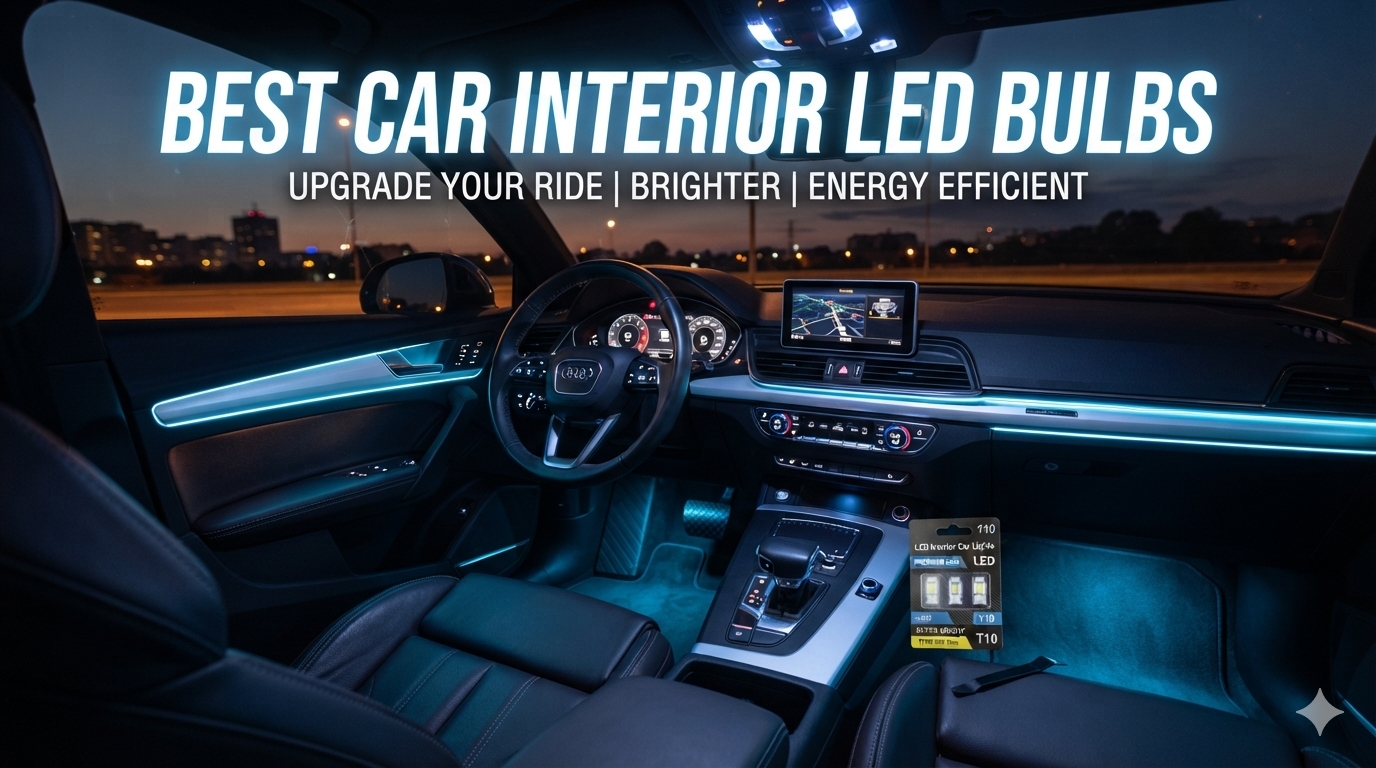
Most cars roll off the factory line with dim, slightly yellow incandescent bulbs lighting up the dome, map, trunk, and door areas. It’s easy to ignore until you’re digging for something under the seat at night and realize you can barely see. Swapping those factory bulbs for LED interior bulbs is one of the cheapest, easiest upgrades you can make — often under 30 minutes with no tools beyond a small trim pry tool.
The tricky part is picking the right bulb. Interior lighting uses a handful of different bulb shapes and sizes depending on where it’s installed, and the market is flooded with nearly identical-looking listings at wildly different quality levels.
We compared the most popular interior LED bulb kits and single-bulb options to find the ones that actually deliver bright, even, flicker-free light without triggering dashboard errors — plus everything you need to know to buy the right size the first time.
Who This Guide Is For
This guide is for anyone whose dome, map, trunk, or door lights look dim, yellow, or dated compared to the rest of a modern cabin — and for anyone replacing a burnt-out interior bulb who wants to upgrade to LED while they’re at it. If you’re chasing colorful ambient lighting rather than brighter, whiter functional bulbs, we cover that distinction too, since the two are easy to confuse when shopping.
Why Upgrade to LED Interior Bulbs?
Beyond looking noticeably brighter and more modern, LED bulbs draw a fraction of the power that incandescent bulbs use, which matters more than it sounds — leaving a dome light on with an incandescent bulb can meaningfully drain a battery over several hours, while an LED sipping far less power buys you much more margin.
LEDs also produce very little heat compared to incandescent bulbs, and they’re rated to last tens of thousands of hours rather than the year or two you might get out of a factory bulb.
Best Car Interior LED Bulbs at a Glance
Short on time? Here’s the quick answer. Each pick is explained in more detail further down the page.
| Product | Best For | Bulb Type | Price |
|---|---|---|---|
| SEALIGHT 194 LED Bulb Kit | Best Overall | T10/194 Wedge | $$ |
| AUXITO 194 LED Bulbs | Best for Beginners | T10/194 Wedge | $ |
| LASFIT Festoon LED Bulbs | Best for Dome Housings | Festoon (31–42mm) | $ |
| Philips Ultinon LED Interior Bulbs | Best Premium Pick | T10/194 Wedge | $$$ |
| Marsauto 42-Piece LED Combo Kit | Best Value Full-Car Kit | Mixed | $$ |
| HIKARI CANbus LED Bulbs | Best for Error-Free Fitment | T10/194 Wedge | $$ |
| Govee App-Controlled LED Strip Kit | Best for Ambient Lighting | LED Strip | $$$ |
1. SEALIGHT 194 LED Bulb Kit — Best Overall

PROS
- Bright, even 6000K white light, CANbus-friendly to avoid dashboard errors, budget-friendly for the quality
CONS
- Wedge base only — check your housing type before buying
Best for: Most drivers replacing dome, map, glovebox, or license plate bulbs on a modern car.
SEALIGHT’s 194 (T10/168/W5W) LED bulbs hit the sweet spot most shoppers are actually looking for: bright, even 6000K white light, a CANbus-friendly design that avoids the flickering or dashboard warning lights that plague cheaper bulbs on some vehicles, and a price that doesn’t feel like a premium tax.
The wedge base is the most common interior bulb size, covering dome lights, map lights, glovebox lights, and license plate housings on the vast majority of cars.
Multiple bulbs per pack mean you can realistically redo every small interior light in one purchase. The main thing to watch is fitment — this is a wedge-base bulb, so it won’t work in festoon-style dome housings that take a tube-shaped bulb instead.
2. AUXITO 194 LED Bulbs — Best for Beginners

PROS
- Non-polarized for foolproof installation, strong track record for reliability, widely compatible
CONS
- Not the brightest option if maximum output is the priority
Best for: First-time buyers who want a dependable, no-guesswork upgrade.
If you’ve never swapped a bulb before, this is the safest starting point. The non-polarized design means the bulb works no matter which way you insert it, eliminating the trial-and-error flipping that trips up first-timers. It has a large, established review base and a reputation among online car-modification communities as the reliable, low-drama choice for a first LED upgrade.
It won’t out-brighten the more specialized options on this list, but for straightforward dome and map light upgrades, the combination of easy installation and consistent quality control makes it hard to go wrong.
3. LASFIT Festoon LED Bulbs — Best for Dome Housings

PROS
- Purpose-built for tube-style festoon housings, error-free design, bright and even output
CONS
- Multiple length options mean you must measure your existing bulb correctly before buying
Best for: Dome lights, trunk lights, and door lights that use a festoon-style bulb rather than a wedge base.
Not every interior light uses a wedge-base bulb — many dome lights, trunk lights, and door courtesy lights use a tube-shaped festoon bulb instead, measured by length (commonly 31mm, 36mm, or 42mm).
LASFIT’s festoon LEDs are built specifically for this style, with an error-free design intended to avoid the flickering some festoon LEDs cause in older or more sensitive electrical systems.
Because festoon bulbs come in several lengths, this is the one category on this list where getting the exact measurement right matters more than brand — double-check your old bulb’s length before ordering.
4. Philips Ultinon LED Interior Bulbs — Best Premium Pick

PROS
- Refined, natural white color output, strong brand reputation and quality control, consistent performance across bulbs
CONS
- Noticeably pricier than most alternatives on this list
Best for: Drivers who want OEM-quality color accuracy and are willing to pay for it.
Philips is one of the longest-standing names in automotive lighting, and its Ultinon LED line reflects that with tighter manufacturing tolerances and a more refined, even beam pattern than most budget alternatives. The color temperature is designed to look closer to a natural white rather than the slightly blue-tinted output some cheaper LEDs produce.
That extra polish comes at a real price premium compared to bulk multi-packs from lesser-known brands. If you care about color accuracy and long-term consistency more than squeezing out every possible lumen, though, it’s worth the extra cost.
5. Marsauto 42-Piece LED Combo Kit — Best Value Full-Car Kit

PROS
- Very low cost per bulb, covers multiple bulb sizes and housing types in one purchase, great for a full interior overhaul
CONS
- You’ll likely have unused bulbs left over unless doing multiple vehicles
Best for: Anyone replacing most or all of their interior bulbs at once, or covering more than one car.
If you’re planning to replace every small bulb in and around the cabin in one go — dome, map, trunk, door, glovebox, and license plate — a large combo kit like this is far cheaper per bulb than buying each size separately. Marsauto’s kit bundles multiple wedge and festoon sizes together, so you’re covered regardless of which bulb type a given housing uses.
The trade-off with any large combo kit is that you’ll likely have leftover bulbs in sizes you didn’t need — useful if you plan to also do a second car, less so if you only needed a handful of replacements.
6. HIKARI CANbus LED Bulbs — Best for Error-Free Fitment

PROS
- Designed specifically to avoid flicker and dashboard error messages, solid brightness, good for newer or more sensitive vehicles
CONS
- Costs more than basic wedge bulbs without CANbus circuitry
Best for: Newer vehicles or anyone who has already run into flickering or error codes with a standard LED bulb.
Some vehicles — particularly newer models with more sensitive onboard electronics — will throw a dashboard warning or flicker when a standard LED bulb doesn’t draw the exact resistance the factory bulb did.
HIKARI builds its interior bulbs around a CANbus-compatible design specifically to sidestep that issue, using a built-in resistor or driver IC to mimic the electrical signature of a stock bulb.
If you’ve already tried a cheaper LED bulb and dealt with flickering or an error message, this is the category to look at before assuming your car simply can’t run LED interior bulbs.
7. Govee App-Controlled LED Strip Kit — Best for Ambient Lighting

PROS
- Full color customization and app control, adds a real ambiance upgrade beyond simple brightness, music-sync features on many models
CONS
- Pricier, more involved installation, doesn’t replace or improve your existing functional bulbs
Best for: Drivers who want colorful ambient lighting in addition to (not instead of) their factory or upgraded functional bulbs.
This one is a different category entirely — not a replacement bulb, but an adhesive LED strip kit that adds customizable, app-controlled ambient lighting to footwells, door panels, or under the dash.
If your goal is mood lighting and color options rather than brighter functional bulbs, this is the product category to shop, not a wedge or festoon bulb.
It’s a genuinely different upgrade with its own installation process (routing wiring and adhesive strip placement) and it’s the priciest option here. For drivers who specifically want customizable ambiance, though, nothing else on this list does that job.
How We Chose These Products
We compared interior LED bulbs on brightness (lumens), color temperature accuracy, compatibility across common bulb sizes and housing types, and — critically — whether they caused flickering or dashboard warning lights on CANbus-equipped vehicles, since that’s the single most common complaint with budget LED interior bulbs.
We also weighed ease of installation, including whether a bulb was polarity-sensitive, and cross-referenced verified buyer feedback and community discussion to separate consistently reliable brands from listings with frequent quality-control complaints.
What Are Car Interior LED Bulbs?
Car interior LED bulbs are direct replacements for the small incandescent bulbs used in dome lights, map lights, trunk lights, door courtesy lights, glovebox lights, and license plate housings. LEDs produce brighter, whiter light while drawing less power and lasting far longer than the factory bulbs they replace, which typically use a warm, slightly yellow-toned filament.
Interior bulbs generally come in two base styles. Wedge bulbs (commonly labeled 194, 168, T10, or W5W) have two small metal prongs and push straight into a socket — these are the most widely used size for dome, map, and glovebox lights.
Festoon bulbs are tube-shaped with metal caps on each end, measured by length (31mm, 36mm, 41mm, and 42mm are common), and are typically found in dome light housings and some trunk or door lights. Getting the base style and exact size right is the single most important step before buying.
Common Interior Bulb Locations and Typical Sizes
Sizes vary by make and model, so always confirm against your own vehicle, but this covers the most common setup on modern cars:
| Location | Common Bulb Type | Notes |
|---|---|---|
| Dome / overhead light | Festoon (31–42mm) or wedge | Most common spot for a festoon-style bulb |
| Map lights | Wedge (194/168/T10) | Often a small, focused-beam bulb |
| Glovebox light | Wedge (194/168/T10) | Usually the smallest bulb in the cabin |
| Trunk / cargo light | Festoon or wedge | Check housing shape before ordering |
| Door courtesy light | Wedge or festoon | Varies widely by manufacturer |
| License plate light | Wedge (194/168/T10) | Technically exterior, but same bulb family |
How to Choose the Right Interior LED Bulbs?
Know Your Bulb Type and Size First
Before shopping, remove your existing bulb and check the size printed on it, or measure a festoon bulb’s length. Common wedge sizes include 194, 168, and T10 (these numbers are often interchangeable across the same physical bulb), while festoon sizes are labeled by millimeter length. Buying the wrong size is the most common and easily avoidable mistake.
Check for CANbus Compatibility
Many newer vehicles monitor bulb resistance electronically and will flicker or trigger a dashboard warning if a bulb doesn’t match the expected electrical load. If your car is a recent model year, or you’ve had flickering issues before, look specifically for bulbs labeled CANbus-compatible or error-free.
Color Temperature: What the ‘K’ Number Means
Color temperature is measured in Kelvin (K) and tells you how warm or cool the light looks. Around 5000K to 6000K gives a natural white close to daylight, while 6500K and above leans slightly blue-white.
Neither is objectively better — it’s a style preference — but sticking to one consistent color temperature across all your bulbs avoids a mismatched look between, say, your dome light and your license plate light.
Brightness and Lumens
Lumens measure total light output — higher generally means brighter, but very high lumen counts in a small dome or map light can occasionally feel harsh in an enclosed cabin at night. For most interior applications, a moderate lumen count with a wide, even beam angle looks better in practice than the single highest number you can find.
Polarity: Does It Matter Which Way the Bulb Goes In?
Some LED bulbs are polarity-sensitive, meaning they’ll only light up if inserted the correct way and need to be flipped if they don’t work on the first try. Non-polarized bulbs light up no matter the orientation, which removes a small but common source of first-time installation frustration.
Single Bulbs vs. Full Combo Kits
If you only need to replace one or two lights, a small pack of the correct size is the cheaper, more targeted choice. If you’re planning to upgrade most or all of your interior lighting at once, a large combo kit with multiple sizes included is usually a better cost-per-bulb value, even accounting for the sizes you won’t end up using.
How to Replace a Car Interior Bulb (Step by Step)
- Turn off the light and let it cool. If the bulb was recently on, give it a minute — incandescent bulbs especially can be hot to the touch.
- Remove the light housing cover. Most dome and map light covers pop off with light pressure from a flat trim tool or a flathead screwdriver wrapped in a cloth to avoid scratching the surrounding trim.
- Note the bulb’s orientation before removing it. If your replacement is polarity-sensitive, this saves you a step later.
- Pull or twist out the old bulb. Wedge bulbs typically pull straight out; festoon bulbs usually need to be gently pried from one end.
- Insert the new LED bulb. Push wedge bulbs straight in until seated, or clip festoon bulbs into both end caps.
- Test before closing the housing. Turn the light on to confirm it works and check the orientation before reattaching the cover.
- Snap the housing cover back into place. Most covers click back in with light, even pressure — avoid forcing one edge before the others are aligned.
Functional Bulbs vs. Ambient Lighting: Which Do You Need?
It’s easy to conflate these two upgrades while shopping, but they solve different problems:
- Functional LED bulbs are direct, like-for-like replacements for your existing dome, map, trunk, and door bulbs. They don’t change color — they just make the existing light brighter and whiter.
- Ambient lighting kits (LED strips, fiber-optic kits, footwell lights) add new, customizable colored lighting that didn’t exist in your car before, usually controlled by an app or remote.
Many enthusiasts start with a functional bulb upgrade, since it’s cheaper and solves the immediate visibility problem, and add ambient lighting later as a separate, purely cosmetic upgrade.
Common Mistakes to Avoid
- Buying the wrong bulb size. Always check the size printed on your old bulb, or measure a festoon bulb’s length, before ordering.
- Skipping the CANbus check on newer vehicles. A non-CANbus bulb can cause flickering or a dashboard warning light on cars with more sensitive electrical monitoring.
- Mixing color temperatures across different lights. Using a 6000K bulb in one housing and a 6500K bulb in another creates a visibly mismatched look.
- Forcing a polarity-sensitive bulb without testing first. If a new bulb doesn’t light up, try flipping it before assuming it’s defective.
- Prying housing covers with excessive force. This is the most common way to crack interior trim during a bulb swap — use steady, even pressure and the right tool.
- Assuming every dome light uses the same bulb as the last car you owned. Base style and size vary by make, model, and even trim level — always check rather than assume.
Final Verdict
For most drivers, SEALIGHT’s 194 LED Bulb Kit is the easiest all-around recommendation — bright, CANbus-friendly, and priced for a full interior refresh. If you’re doing this for the first time and want a foolproof install, AUXITO’s non-polarized bulbs remove the guesswork. And if your dome light uses a tube-style bulb instead of a wedge, don’t skip straight to checkout — confirm you need LASFIT’s festoon bulbs instead, since the wrong base style simply won’t fit.
Whichever you choose, a 20-minute bulb swap is one of the best-value upgrades you can make to how your car feels at night.
Frequently Asked Questions
What Size LED Bulb Does My Car’s Dome Light Use?
It depends on the vehicle, but most dome and map lights use either a 194/168/T10 wedge bulb or a festoon bulb sized between 31mm and 42mm. The easiest way to confirm is to remove your existing bulb and check the number printed on its base, or measure a festoon bulb end to end.
Why is My New LED Interior Bulb Flickering?
Flickering usually means the bulb isn’t CANbus-compatible and your vehicle’s electrical system is detecting a mismatch in resistance compared to the factory bulb. Switching to a bulb specifically labeled CANbus-compatible or error-free typically resolves it.
Are LED Interior Bulbs Legal?
White LED replacement bulbs for interior lights like dome, map, and trunk lights are generally not regulated the way exterior lighting is, since they aren’t visible from outside the vehicle or used for signaling. Regulations do vary by location, so it’s worth a quick check of local rules if you’re installing colored or exterior-adjacent lighting.
Do I Need Any Tools to Replace an Interior Bulb?
Most interior bulb swaps need nothing more than a small flat trim tool or a flathead screwdriver to pop the housing cover open — many kits even include a simple pry tool. No wiring or electrical tools are required for a standard bulb replacement.
How Long Do LED Interior Bulbs Last?
LED bulbs are typically rated for tens of thousands of hours of use, far outlasting the incandescent bulbs they replace, which usually need replacement every couple of years with regular use. In practice, most LED interior bulbs will outlast the vehicle’s other interior components.
Can I Mix LED and Incandescent Bulbs in the Same Car?
Yes, there’s no functional problem with running LED bulbs in some housings and factory incandescent bulbs in others. The only downside is a visible mismatch in brightness and color between the two, which is why most people upgrade all their interior bulbs in one pass rather than doing it piecemeal.
What’s the Difference Between 194 and 168 Bulbs?
These part numbers refer to nearly identical physical bulbs with the same wedge base and are commonly used interchangeably by manufacturers and retailers. In practice, a 194, 168, or T10-labeled bulb will almost always fit the same socket, though it’s still worth confirming against your vehicle’s specific bulb chart if you want to be certain.
How Much Does it Cost to Upgrade all My Interior Bulbs?
A small pack covering just the dome and map lights typically costs well under $15, while a full combo kit covering every interior bulb in the cabin usually runs $15 to $30. It’s one of the least expensive upgrades available for how noticeable the difference is.
Can a Bad Interior LED Bulb Damage my Car’s Electrical System?
A poorly made bulb is far more likely to simply flicker, fail early, or trigger a dashboard warning than to cause any real electrical damage. Sticking with a reputable brand and a CANbus-compatible bulb where needed avoids these issues entirely