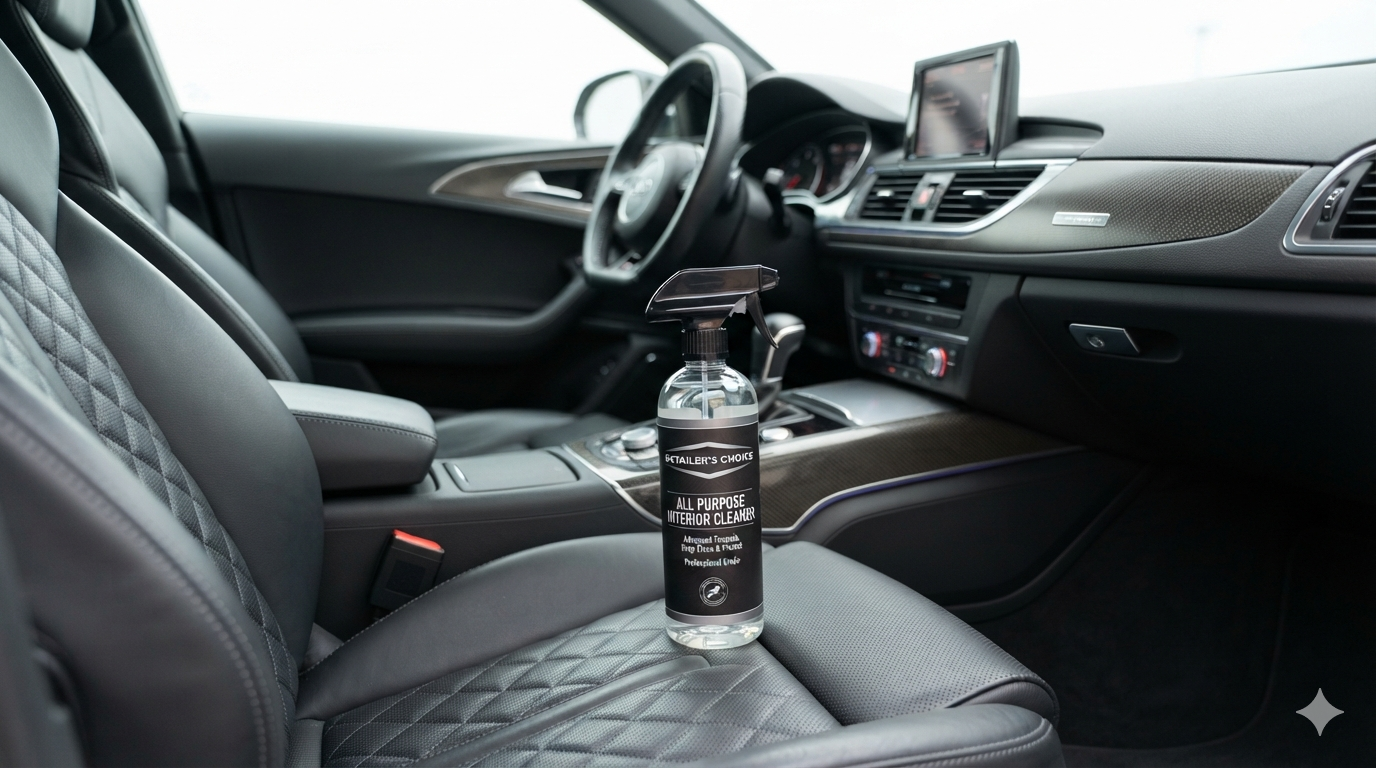
A car’s interior collects dirt faster than almost any other surface you own. Coffee rings on the console, dusty air vents, smudged door panels, muddy footprints on the mats — it piles up fast, especially if you commute daily or haul kids and pets around.
The fastest fix is the best car interior all purpose cleaner: one bottle that handles the dashboard, door panels, plastic trim, and vinyl without you needing a separate product for every surface.
But not every cleaner on the shelf lives up to that promise. Some leave a greasy film. Some smell so strong you’ll want to drive with the windows down. Some barely cut through real grime at all.
We compared the most popular all-purpose interior cleaners on the market — looking at cleaning power, scent, residue, surface safety, and price — to find the ones actually worth keeping in your trunk. Here’s what stood out, plus a full buying guide so you can pick the right one for your car.
Who this Guide is for:
This guide is for anyone who wants a fast, reliable way to clean their car’s interior without buying a separate bottle for every surface — daily commuters dealing with everyday dust and fingerprints, parents cleaning up after kids and snacks, pet owners fighting fur and mud, and anyone prepping a used car for resale who needs it looking its best.
If your interior needs more than a wipe-down — deep-set carpet stains, cracked leather, or heavy odor removal — we’ll point you toward the specialized products built for those jobs, too.
- Our Top Picks of Best Car Interior All-Purpose Cleaners at a Glance
- 1. Chemical Guys Total Interior Cleaner & Protectant — Best Overall
- 2. Meguiar’s Quik Interior Detailer — Best Value
- 3. Griot’s Garage Interior Cleaner — Best for Fabric & Carpet
- 4. Carfidant Ultimate Cleaner — Best for Tough Stains
- 5. Turtle Wax Ceramic Graphene Interior Cleaner & Protectant — Best Ceramic Formula
- 6. Adam’s Polishes Interior Detailer — Best Quick Detailer
- 7. Armor All Cleaning Wipes — Best for On-the-Go
- How We Chose These Products
- Signs Your Car’s Interior Needs a Deeper Clean
- What Is an All-Purpose Interior Cleaner?
- How to Choose the Best All-Purpose Interior Cleaner for Your Car?
- How to Use an All-Purpose Interior Cleaner (Step by Step)
- All-Purpose Cleaner vs. Specialized Interior Products
- Common Mistakes to Avoid When Cleaning Your Car’s Interior
- Tips for Keeping Your Interior Clean Longer
- What Professional Detailers Do Differently
- Frequently Asked Questions
- What is the Best All-Purpose Cleaner for a Car Interior?
- Can I Use an All-Purpose Interior Cleaner on Leather Seats?
- How Often Should I Clean My Car’s Interior?
- Are All-Purpose Interior Cleaners Safe on Touchscreens?
- Do All-Purpose Cleaners Work on Carpet Stains?
- What’s the Difference Between an Interior Cleaner and a Quick Detailer?
- How Much Does a Good Interior Cleaner Cost?
- Can I Make my Own All-Purpose Interior Cleaner at Home?
- Will an Interior Cleaner Remove Smells from My Car?
- Is it Better to use a Spray Cleaner or a Foam Cleaner?
- Can I use the Same Cleaner on a Motorcycle, Boat, or RV Interior?
- Are Interior Cleaners Safe if I have Kids or Pets in the Car?
- Do I Need Different Cleaners for a New Car Versus an Older Car?
- Ingredients to Look For (and Avoid) in an Interior Cleaner
- Prefer a Complete Kit Instead of One Bottle?
- Final Verdict
Our Top Picks of Best Car Interior All-Purpose Cleaners at a Glance
- Best Overall

Chemical Guys Total Interior Cleaner & Protectant
- Best Value

Meguiar’s Quik Interior Detailer
- Best for Fabric & Carpet

Griot’s Garage Interior Cleaner
- Best for Tough Stains

Carfidant Ultimate Cleaner
- Best Ceramic Formula

Turtle Wax Ceramic Graphene Interior Cleaner & Protectant
Short on time? Here’s the quick answer. Each pick below is explained in more detail further down the page.
1. Chemical Guys Total Interior Cleaner & Protectant — Best Overall
PROS
- Cleans nearly every hard interior surface, adds UV protection, dries fast without residue
CONS
- Strong fragrance, not a substitute for a dedicated leather conditioner on natural leather seats
This is the closest thing to a true one-bottle solution for a car’s interior. It’s formulated to work across dashboards, door panels, plastic trim, vinyl, and even lightly soiled cloth, which means you can clean an entire cabin without switching bottles halfway through.
It also doubles as a UV protectant, adding a layer of defense against sun fading and cracking, which matters most if your car spends a lot of time parked outside.
It sprays on thin, wipes off clean with a microfiber towel, and dries without leaving a greasy or slick film — a common complaint with cheaper all-in-one sprays.
The main trade-off is the scent, which is noticeably strong right after application. If you’re sensitive to fragrance, crack a window for a few minutes after cleaning.
Best for: Drivers who want a single bottle that handles the whole cabin, and anyone whose car sits outside and could use extra UV protection.
2. Meguiar’s Quik Interior Detailer — Best Value
PROS
- Budget-friendly, easy to find, light pleasant scent, no streaking
CONS
- Not strong enough for heavy grime or set-in stains
If you just want an affordable spray for regular upkeep, this is a smart pick. It’s inexpensive, widely available at any auto parts store, and does a solid job on everyday buildup — dust, fingerprints, light grime on the dash and console. The scent is mild rather than overpowering, and it doesn’t leave streaks behind.
Where it falls short is on tougher jobs. Set-in stains, grease, or heavier dirt usually need a second pass — or a stronger cleaner altogether. Think of this one as a maintenance product rather than a deep-clean solution.
Best for: Anyone who wants a low-cost bottle for weekly touch-ups and doesn’t need it to tackle serious messes.
3. Griot’s Garage Interior Cleaner — Best for Fabric & Carpet
PROS
- Fragrance-free, safe on fabric and carpet, large bottle, minimal residue
CONS
- Not intended for glass or touchscreens, no added UV protection
Most all-purpose cleaners are built with hard plastic and vinyl in mind, which makes this one stand out — it’s formulated to be safe on cloth seats and carpet in addition to trim and dashboards.
It’s fragrance-free, which is a real advantage if you or a passenger is sensitive to scented cleaning products, and the bottle is large enough to last through several full details.
It’s not built for glass or touchscreens, so you’ll still want a dedicated glass cleaner for the windshield and windows. But for anyone whose interior is mostly cloth rather than leather or vinyl, this is one of the more versatile options out there.
Best for: Cloth-interior cars, households with scent sensitivities, and anyone who wants one cleaner for both hard trim and seats.
4. Carfidant Ultimate Cleaner — Best for Tough Stains
PROS
- Strong cleaning power on set-in grime, multi-surface use, good for used-car cleanup
CONS
- Higher price point, stronger scent than average
When you’re dealing with a genuinely neglected interior — think a used car you just bought, or a family vehicle that hasn’t been detailed in years — this is the cleaner built for the job. It’s formulated for stronger cleaning power against ground-in dirt, grease, and stains, and many owners also use it on select exterior parts like trim and wheel wells.
That extra strength comes at a cost: it’s pricier than most of the other options here, and the scent is on the stronger side. But if your priority is restoring a truly dirty cabin rather than routine maintenance, the trade-off is worth it.
Best for: Restoring a neglected or newly purchased used car, or anyone who wants one strong cleaner instead of layering several lighter products.
5. Turtle Wax Ceramic Graphene Interior Cleaner & Protectant — Best Ceramic Formula
PROS
- Cleans and protects in one step, even spray pattern, reasonably priced for the technology
CONS
- Dust resistance is subtle rather than dramatic, noticeable scent
This one combines cleaning with a ceramic-graphene protective layer, aiming to leave surfaces cleaner for longer and more resistant to dust buildup between cleanings. It has a controlled, even spray pattern that makes it easy to apply without oversaturating a surface, and it’s competitively priced considering the added protective technology.
The dust-repelling benefit is real but subtle — don’t expect a dramatic difference day to day. It’s best thought of as a solid cleaner with a modest protective bonus rather than a miracle coating.
Best for: Drivers curious about ceramic-based interior care who want a taste of the technology without paying professional-detailing prices.
6. Adam’s Polishes Interior Detailer — Best Quick Detailer

PROS
- Pleasant scent, quick and low-effort, good for regular touch-ups
CONS
- Not built for deep cleaning, can look uneven if over-applied
This is less of a deep cleaner and more of a maintenance spray — the kind of product you reach for weekly to keep a dashboard and console looking fresh between full details. It has a pleasant scent and leaves a light, even finish without feeling slick or greasy underhand.
It’s not designed to cut through heavy grime, so don’t expect it to replace a proper cleaner when your interior needs real work. Used the way it’s intended — as light, regular upkeep — it performs well.
Best for: Drivers who already deep-clean occasionally and just want an easy way to keep things looking fresh in between.
7. Armor All Cleaning Wipes — Best for On-the-Go

PROS
- Extremely convenient, no extra tools needed, inexpensive
CONS
- Limited power against real messes, dispenser can waste sheets
For quick fixes between real cleanings, nothing beats the convenience of a wipe. Keep a container in the glovebox or console and you’re covered for spills, dusty vents, and smudged surfaces without needing a spray bottle or towel. They’re inexpensive and sold practically everywhere, which makes them an easy first purchase for new car owners.
They’re noticeably weaker than spray formulas against real grime, and the pull-through dispenser sometimes drags out two or three sheets at once. They’re best treated as a backup for quick touch-ups, not a replacement for a full interior cleaner.
Best for: Glovebox emergencies, road trips, and parents or pet owners who need a fast fix without carrying a spray bottle around.
How We Chose These Products
To build this list, we looked at how each cleaner performed on the surfaces drivers deal with most often — hard plastic dashboards, door panels, vinyl trim, and cloth upholstery.
We weighed cleaning power against real grime, whether the formula left streaks or a greasy residue behind, how strong or pleasant the scent was, how many surfaces each product could safely handle, and overall value for the price.
We also cross-referenced ingredient labels and manufacturer surface-safety guidance, and factored in feedback from long-time detailing enthusiasts and verified buyers to separate the products with a track record from the ones riding on marketing alone.
In practice, that meant applying each cleaner to comparable dashboard and door-panel sections with similar everyday buildup — dust, fingerprints, and light food residue — then checking how much effort it took to lift the grime with a single wipe.
We also let each product sit for a few minutes to see whether it dried to a residue-free finish or left behind a slick, dust-attracting film, and we noted scent strength both immediately after application and once the cabin had aired out.
Signs Your Car’s Interior Needs a Deeper Clean
A quick wipe-down handles everyday upkeep, but certain signs mean it’s time to go beyond an all-purpose spray:
- Visible film on the dashboard or console even right after wiping — usually a sign of built-up residue from cheaper cleaners or air fresheners.
- Musty or stale odors that don’t go away with a wipe-down, which often point to trapped moisture in carpets or upholstery.
- Ground-in stains on carpet or seats that a quick spray doesn’t lift, signaling it’s time for a dedicated carpet or upholstery shampoo.
- Stiff, cracking, or faded leather, which needs a proper leather cleaner and conditioner rather than an all-purpose formula.
- Hazy or streaked glass that a general interior cleaner can’t fully clear — a job for a dedicated glass cleaner instead.
What Is an All-Purpose Interior Cleaner?
An all-purpose interior cleaner is a spray or wipe formulated to safely clean multiple cabin surfaces — the dashboard, door panels, center console, plastic trim, and vinyl — with one product instead of several. Most are designed to lift dust, fingerprints, food residue, and light grime without leaving behind a slick or sticky finish.
It’s different from specialized products like leather cleaner, glass cleaner, or carpet shampoo, which are built for one surface and one job. An all-purpose cleaner is meant to be the everyday workhorse — the bottle you reach for most often — while specialized products handle the surfaces that need extra care.
Most formulas fall into one of two categories: a straightforward cleaner, meant to actively lift dirt and oils, or a cleaner-protectant, which cleans while also adding a thin protective layer against sun damage, dust, or future staining.
Neither type is strictly better — a cleaner alone is often enough for regular maintenance, while a cleaner-protectant is worth the extra step if your car spends a lot of time in direct sunlight.
How to Choose the Best All-Purpose Interior Cleaner for Your Car?
Check Surface Compatibility First
Not every cleaner is safe on every material. Some formulas are made only for hard plastic and vinyl, while others are also safe on cloth or carpet. If your interior has real leather, be extra careful — many all-purpose cleaners can dry out or discolor leather over time, so check the label before spraying your seats.
Consider the Scent
Scent is one of the most personal parts of choosing a cleaner, and it matters more than people expect since you’ll be sitting in that smell every time you drive. If you’re sensitive to strong fragrances, or you’ll be using the product in a small, enclosed cabin, look for a fragrance-free or lightly scented option.
Look at Residue and Finish
Some cleaners leave a matte finish, while others leave a slight sheen or gloss. Neither is objectively better — it comes down to preference — but a cleaner that leaves a greasy or sticky residue is a real problem, since it attracts more dust and can make surfaces feel dirty again within days.
UV and Sun Protection
Constant sun exposure fades and cracks plastic and vinyl over time. Cleaners that double as a UV protectant help slow that damage, which is especially useful if your car is parked outside most of the time or you live somewhere with intense sun.
Spray, Foam, or Wipes?
Sprays give you the most control and are best for a thorough clean. Wipes are unmatched for convenience and quick touch-ups but generally can’t match a spray’s cleaning power. Foam cleaners tend to cling better to vertical surfaces like door panels, which can help the product dwell longer on tough grime.
Ingredients and Eco-Friendliness
If you’re cleaning your car’s interior often, or you have kids and pets in the back seat, it’s worth checking whether a cleaner is biodegradable or free of harsh solvents. Many detailing brands now offer formulas that clean effectively without strong chemical odors or aggressive ingredients.
Bottle Size and Value
A bigger bottle isn’t always the better deal — check the concentration and how much product a single cleaning session actually uses. A smaller, more concentrated formula can outlast a larger bottle of a weaker spray, so it’s worth comparing cost per use rather than just the price on the shelf.
How to Use an All-Purpose Interior Cleaner (Step by Step)
- Vacuum first. Clear loose dirt and crumbs before you spray anything, so you’re not just moving grit around.
- Spot-test in a hidden area. Try the cleaner on a small, out-of-sight spot first, especially on colored or delicate trim.
- Spray onto a cloth, not directly on electronics. For touchscreens, vents, or buttons, mist the cleaner onto a microfiber towel first to avoid liquid getting into gaps.
- Work in small sections. Clean one panel or surface at a time so the product doesn’t dry before you wipe it away.
- Wipe with a clean microfiber towel. Microfiber lifts dirt without scratching and won’t leave lint behind the way paper towels can.
- Let it dry or buff for a finish. Some cleaners need a few minutes to dry; others are ready to buff immediately for a streak-free look.
- Repeat on a schedule. A quick wipe-down every one to two weeks and a deeper clean monthly keeps grime from building up in the first place.
All-Purpose Cleaner vs. Specialized Interior Products
An all-purpose cleaner is great for everyday maintenance, but some surfaces do better with a dedicated product:
- Leather seats: Use a leather cleaner and conditioner instead — all-purpose cleaners can dry out natural leather over time.
- Glass and windows: A dedicated glass cleaner avoids the streaking and hazing that all-purpose formulas can leave on glass.
- Carpets and floor mats: A carpet and upholstery shampoo digs deeper into fibers than a general spray can.
- Sun-faded plastic or trim: A dedicated UV protectant or trim restorer offers stronger, longer-lasting sun protection than a general cleaner’s built-in UV additive.
Think of an all-purpose cleaner as your everyday tool, and these specialized products as the ones you bring out for a deeper seasonal detail.
Common Mistakes to Avoid When Cleaning Your Car’s Interior
- Spraying directly onto touchscreens or buttons. Liquid can seep into gaps and damage electronics — always spray a cloth instead.
- Using household glass cleaner on tinted windows. Ammonia-based cleaners can damage window tint film over time.
- Skipping the vacuum step before carpet cleaning. Working a cleaner into dirty carpet just pushes debris deeper into the fibers.
- Using too much product. Overspraying leads to a greasy film that actually attracts more dust.
- Ignoring seams, vents, and crevices. These spots trap the most dust and are easy to miss with a quick wipe-down.
- Cleaning in direct sunlight. Cleaners can dry too fast in the heat, leaving streaks — clean in the shade or with the car parked in a garage when possible.
- Reusing a dirty towel across multiple surfaces. A towel loaded with grime just smears dirt around instead of lifting it — flip to a clean side or swap towels as you move between panels.
- Mixing products that aren’t meant to be layered. Combining a cleaner with an unrelated protectant or wax can leave a hazy or streaky finish — stick to one system per surface unless the labels say otherwise.
Tips for Keeping Your Interior Clean Longer
Buying the right cleaner is only half the battle — a few small habits go a long way toward keeping your interior looking freshly detailed:
- Keep a trash bag or small bin in the car. Most interior clutter and stains start with trash that had nowhere to go.
- Use seat covers and floor mats. They take the brunt of daily wear and are far easier to clean or replace than the seats and carpet underneath.
- Wipe up spills immediately. The longer a spill sits, the more likely it is to stain or soak into carpet and upholstery.
- Vacuum on a regular schedule. Even a quick weekly vacuum prevents dirt from grinding into carpet fibers over time.
- Crack the windows when parked in the sun. This reduces heat buildup that can bake in odors and speed up wear on plastic and vinyl.
What Professional Detailers Do Differently
Professional detailers rarely rely on a single all-purpose cleaner for an entire job — but they also don’t overcomplicate it. Most start with a thorough vacuum, including crevices, seat tracks, and under the pedals, since loose debris makes every step after that less effective.
From there, they typically work top-down: headliner and upper trim first, then dashboard and console, then door panels, and finally seats and carpet last, so dust knocked loose from higher surfaces doesn’t land on areas they’ve already cleaned.
They also tend to use less product than most DIYers expect. A light, even mist and a clean microfiber towel usually outperforms a heavy spray-down, since excess product is what leads to the greasy residue and dust buildup that make an interior look dirty again within days.
Applying a little at a time, working in small sections, and switching to a fresh towel side often is a simple habit that makes a real difference in the final result.
Frequently Asked Questions
What is the Best All-Purpose Cleaner for a Car Interior?
For most drivers, a versatile spray like Chemical Guys Total Interior Cleaner & Protectant is the best all-around choice because it’s safe on multiple surfaces and adds UV protection. If you’re on a budget, Meguiar’s Quik Interior Detailer is a solid, affordable alternative for routine upkeep.
Can I Use an All-Purpose Interior Cleaner on Leather Seats?
Light, occasional use is usually fine for most all-purpose formulas, but they’re not a long-term solution for leather. Real leather needs its own cleaner and conditioner to stay soft and avoid cracking, so it’s worth investing in a dedicated leather-care product if your car has leather seats.
How Often Should I Clean My Car’s Interior?
A light wipe-down every one to two weeks keeps everyday dust and grime from building up. A deeper clean — including carpets, seats, and crevices — once a month or once a season is usually enough to keep an interior looking and smelling fresh.
Are All-Purpose Interior Cleaners Safe on Touchscreens?
Not always. Some formulas can damage anti-glare or fingerprint-resistant coatings on modern infotainment screens. Check the label, and when in doubt, spray the cleaner onto a microfiber cloth rather than directly on the screen — or use a dedicated screen-safe cleaner.
Do All-Purpose Cleaners Work on Carpet Stains?
They can handle light dust and fresh spills, but set-in stains usually need a dedicated carpet and upholstery cleaner formulated to dig into fibers. For tougher stains, vacuum first, then treat with a carpet-specific product.
What’s the Difference Between an Interior Cleaner and a Quick Detailer?
An interior cleaner is meant to lift real dirt, oils, and grime. A quick detailer is a lighter spray meant for maintenance between full cleanings — it freshens surfaces and adds a bit of shine but isn’t built to cut through heavy buildup.
How Much Does a Good Interior Cleaner Cost?
Most quality all-purpose interior cleaners run between $6 and $25, depending on bottle size and added features like UV protection or ceramic coating technology. Spending more doesn’t always mean better results — it often comes down to the specific surfaces and finish you want.
Can I Make my Own All-Purpose Interior Cleaner at Home?
Some people use diluted dish soap or a mix of water and mild vinegar for light cleaning, and it can work in a pinch. However, homemade mixes lack the surface-safety testing and UV or protective additives found in dedicated automotive cleaners, so they’re best treated as a backup rather than a long-term replacement.
Will an Interior Cleaner Remove Smells from My Car?
A good all-purpose cleaner can reduce mild odors that live on hard surfaces, but it won’t fully solve smells trapped in carpet, upholstery, or the air conditioning system. For persistent odors, pair your cleaner with a proper vacuum, an odor-neutralizing spray, and — if needed — a professional-grade odor treatment.
Is it Better to use a Spray Cleaner or a Foam Cleaner?
Sprays are more versatile and easier to control on flat surfaces like dashboards, while foam clings better to vertical surfaces like door panels, giving the product more time to work on stuck-on grime. If you only want one product, a spray is the more flexible choice for most interiors.
Can I use the Same Cleaner on a Motorcycle, Boat, or RV Interior?
Many all-purpose interior cleaners are safe on similar plastic and vinyl surfaces found in boats, RVs, and other vehicles, but always check the product label first. Marine and RV environments often deal with more UV exposure and humidity, so a cleaner with strong UV protection is usually the better choice.
Are Interior Cleaners Safe if I have Kids or Pets in the Car?
Most reputable interior cleaners are safe once fully dried, but it’s smart to let the cabin air out for a few minutes after cleaning, especially with stronger-scented formulas. If you have young kids or pets who chew on surfaces, a fragrance-free or low-VOC option is the safer choice.
Do I Need Different Cleaners for a New Car Versus an Older Car?
Not necessarily, but it’s worth adjusting your approach. Newer interiors often have more delicate soft-touch plastics and larger touchscreens, so a gentler, screen-safe formula makes sense. Older interiors can usually handle a stronger cleaner, since the priority shifts from preserving a like-new finish to actually cutting through years of accumulated grime.
Ingredients to Look For (and Avoid) in an Interior Cleaner
You don’t need a chemistry background to shop smart — but a quick label check can save you from a cleaner that damages your interior or leaves it smelling like a chemical plant.
Look For
- pH-balanced or pH-neutral formulas, which clean effectively without breaking down plastic, vinyl, or dyes over time.
- UV inhibitors, listed as UV protectants or sun-blocking agents, if you want added defense against fading and cracking.
- Biodegradable surfactants, a sign the formula is gentler on both your interior and the environment.
Approach With Caution
- Ammonia-based cleaners, which can damage tinted windows and dry out certain plastics.
- Heavy solvents or bleach, which are far too aggressive for interior surfaces and can cause discoloration.
- Vague ‘all-natural’ claims with no ingredient list, since a real formula should be able to tell you what’s actually in the bottle.
Prefer a Complete Kit Instead of One Bottle?
If you’d rather buy everything at once instead of building your own kit surface by surface, a bundled interior detailing kit is worth considering. These typically include an all-purpose cleaner alongside dedicated products for leather, glass, and carpet, plus applicators like microfiber towels and brushes.
A kit costs more upfront than a single bottle, but it’s a convenient way to get properly equipped for a full interior detail in one purchase, especially if you’re just getting into car care and don’t already own the basics.
For most drivers, though, a strong all-purpose cleaner paired with a dedicated glass cleaner covers 90% of what you’ll actually use — you can always add specialized products later as the need comes up.
Final Verdict
If you only buy one bottle, make it a true all-purpose formula like Chemical Guys Total Interior Cleaner & Protectant — it handles the most surfaces with the least fuss.
Want something easier on the wallet for regular upkeep? Meguiar’s Quik Interior Detailer gets the job done without breaking the bank. And if your interior is mostly cloth, or you’re dealing with a genuinely dirty cabin, Griot’s Garage Interior Cleaner and Carfidant Ultimate Cleaner are worth the extra attention.
Whichever you choose, a few minutes with the right cleaner goes a long way toward making your daily drive feel like a much nicer place to be.