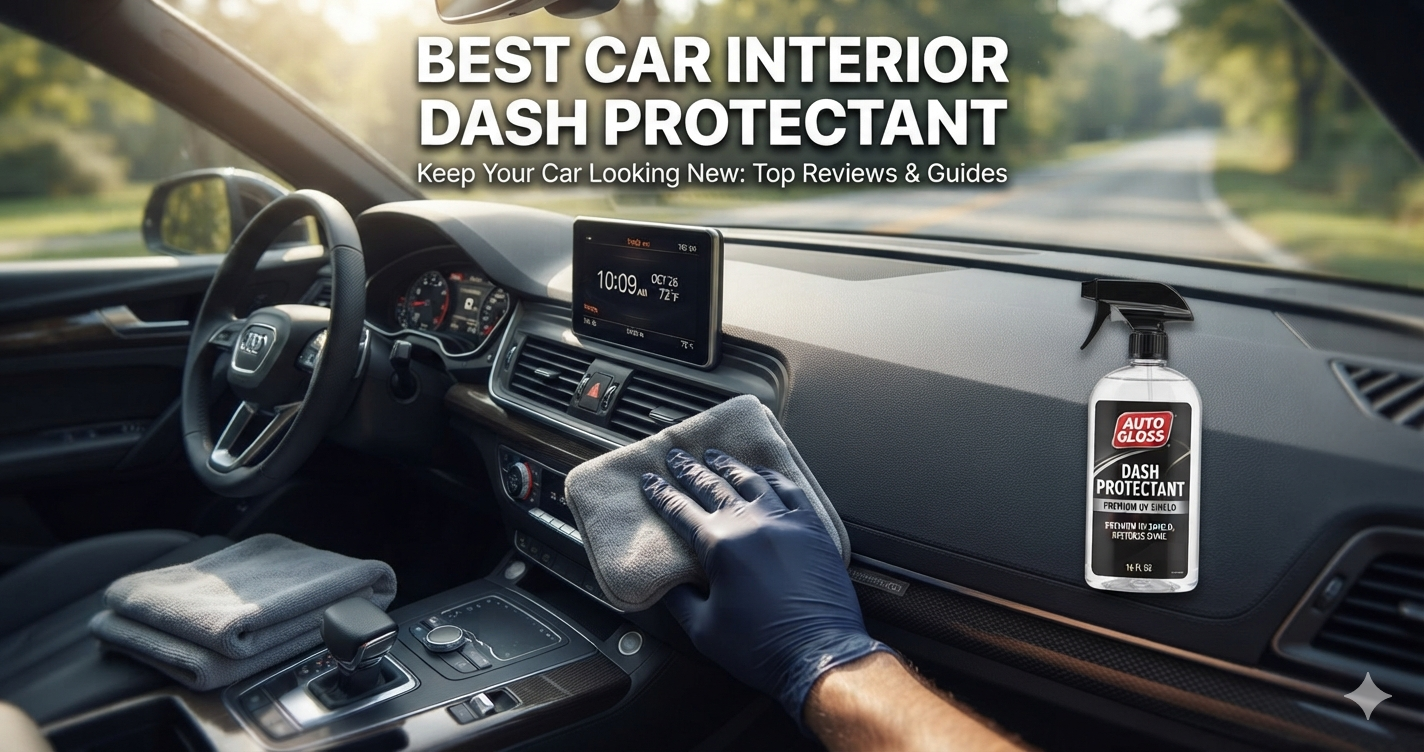
A dashboard spends every day absorbing sunlight, heat, and UV radiation through your windshield. Over time, that constant exposure causes the materials to dry out, fade, lose flexibility, and eventually crack.
Depending on your vehicle, replacing a damaged dashboard can cost anywhere from $1,000 to over $2,500, while even minor interior wear can reduce resale value by $500–$1,500 because it immediately signals neglect to potential buyers. Choosing the best car interior dash protectant is one of the easiest and most affordable ways to prevent that damage before it starts.
Our automotive product research team evaluated today’s leading dashboard protectants using manufacturer specifications, detailing best practices, long-term owner feedback, and practical performance criteria such as UV protection, finish quality, dust resistance, durability, and ease of application.
Whether you want a factory-fresh matte finish, ceramic-level durability, or a budget-friendly maintenance solution, this guide will help you find the right product for your vehicle.
- Why Your Dashboard Needs Protection?
- How UV Radiation Damages Dashboard Materials
- Soft-Touch vs. Hard Vinyl: Why They Degrade Differently
- How We Tested These Dash Protectants
- 9 Best Car Interior Dash Protectants — Full Review in 2026
- 1. 303 Aerospace Protectant:
- 2. Turtle Wax Inside Job Ceramic + Graphene — Best Advanced Formula:
- 3. RENEW PROTECT DASH — Best for Damaged or Sticky Dashboards
- 4. Meguiar’s G4016 Supreme Shine Protectant — Best High-Gloss Finish
- 5. Chemical Guys InnerClean Interior Detailer & Protectant — Best 2-in-1
- 6. Adam’s Polishes Interior Detailer — Best for Touchscreens & Electronics
- 7. SONAX Plastic Detailer — Best Anti-Static Matte Formula
- Why It Stands Out: Anti-Static Protection Without Added Shine
- 8. Griot’s Garage Ceramic Vinyl & Rubber Protectant — Best Ceramic Durability
- Bottom Line:
- 9. Armor All Protectant Wipes — Best Budget Convenience Pick
- Honest Assessment: Where Armor All Still Works (And Where It Doesn’t)
- How to Choose the Best Dash Protectant for Your Car Interior
- Dashboard Material Type: Know What You’re Protecting
- Soft-Touch Thermoplastic (TPO/TPE) — Common in Post-2015 Vehicles
- Hard ABS Plastic — Common in Older Vehicles
- Vinyl-Wrapped Dash — Requires Different Chemistry Than Bare Plastic
- Faux Leather (Leatherette/PU) — Needs Conditioning Protection
- UV Protection Types: Not All UV Defense Is Equal
- UV Absorbers (Benzotriazole, Oxalanilide) — The Gold Standard
- UV Reflectors (Titanium Dioxide, Zinc Oxide)
- UV Clear Coat Technology (Meguiar’s Approach)
- Formula Chemistry: Water-Based vs. Silicone vs. Ceramic
- Water-Based Polymer Formulas — Best for Modern Interiors
- Silicone-Based Dressings — High Shine but Trade-Offs
- Nano-Ceramic Hybrid (SiO₂) — Longest Durability
- Graphene-Infused Formulas — Newest Technology Category
- Anti-Static and Dust Repellency: The Overlooked Feature
- Windshield Fogging and Off-Gassing Risk
- Durability and Cost of Ownership
- How to Apply Dash Protectant Correctly (Step-by-Step)
- Step 1: Deep Vacuum All Surfaces First
- Step 2: Clean With a Dedicated Interior Cleaner (Not a Protectant)
- Step 3: Strip Old Protectant Buildup If Switching Products
- 70/30 Isopropyl Alcohol Solution for Old Silicone Residue Removal
- Step 4: Apply Protectant to an Applicator — Never Spray Directly on Dash
- Step 5: Work in Sections and Buff Excess Immediately
- Step 6: Allow Proper Cure Time (15–60 Minutes Depending on Formula)
- Pro Tip: Reapplication Schedule by Climate Zone and Parking Situation
- Dash Protectant vs. Dashboard Cleaner: Key Differences Explained
- What Interior Cleaners Do (and Don’t Do)
- When to Use Both Together vs. a 2-in-1 Combo Product
- Ammonia-Based Cleaners
- Dashboard Protectant for Different Vehicle Types
- Best Dash Protectant for Trucks and SUVs (Large Surface Area Considerations)
- Best Dash Protectant for Luxury Vehicles (Soft-Touch + Leatherette Dash Panels)
- Best Dash Protectant for Classic and Vintage Cars (High-Gloss Vinyl Restoration)
- Best for Vehicles Parked in Sun-Heavy US States (AZ, FL, TX, CA)
- Signs Your Dashboard Urgently Needs Protectant
- Frequently Asked Questions About Dashboard Protectants
- How often Should I Apply Dashboard Protectant?
- Is 303 Aerospace Protectant Safe for Soft-Touch Dashboards?
- What’s the Difference Between Ceramic and Water-Based Dash Protectants?
- Can Dash Protectant Restore a Cracked or Faded Dashboard?
- Is Armor All Bad for Dashboards?
- Can I use Dash Protectant on My Car’s Touchscreen?
- What Causes a Dashboard to Become Sticky, and How Do I Fix it?
- Does Dash Protectant Prevent Windshield Fogging?
- Final Verdict: Which Dashboard Protectant Should You Buy?
- Best Overall → 303 Aerospace Protectant
- Best for: Most Vehicles, Modern Interiors, UV Protection
- Best for Damaged or Sticky Dash → RENEW PROTECT DASH
- Best for: Older Vehicles, Faded Dashboards, Sticky Surfaces
- It is a better choice for:
- Best Advanced Formula → Turtle Wax Inside Job Ceramic + Graphene
- Best for: Drivers Wanting Newer Protection Technology
- Its strengths include:
- Best for: Enthusiasts and Detail-Focused Owners
- Final Recommendation
Why Your Dashboard Needs Protection?
Most drivers don’t think about dashboard protection until they notice fading around the windshield or tiny cracks beginning to appear. Unfortunately, by that point, the damage has already started beneath the surface.
Unlike paint on your vehicle’s exterior, your dashboard sits behind glass where temperatures regularly exceed 140°F (60°C) during summer. Combined with constant UV exposure, these conditions gradually weaken plastics and vinyl, causing irreversible deterioration.
A quality dashboard protectant acts as a sacrificial barrier, helping reduce UV damage, slow material aging, and preserve the original factory appearance.
Considering that a premium protectant costs about the same as a tank of gas, it’s one of the most cost-effective maintenance products you can buy.
How UV Radiation Damages Dashboard Materials
Your windshield blocks some ultraviolet light, but UV-A radiation still passes through in significant amounts. Over months and years, this triggers a process called photooxidation, where sunlight breaks down the chemical bonds inside plastics and vinyl.
As the material oxidizes, it begins losing the plasticizers that keep dashboards flexible. Once those plasticizers evaporate or degrade, the dashboard becomes brittle.
The damage usually progresses in this order:
- Color fading
- Surface drying
- Loss of flexibility
- Small stress cracks
- Large dashboard cracks
- Permanent structural damage
Heat makes the problem even worse. Daily heating and cooling cycles—known as thermal cycling—cause dashboard materials to expand and contract repeatedly. Combined with UV degradation, this eventually leads to cracking, warping, or separation around vents and instrument panels.
Modern protectants containing advanced UV absorbers such as benzotriazole, oxalanilide, and HALS (Hindered Amine Light Stabilizers) help interrupt this degradation process by absorbing or neutralizing harmful ultraviolet energy before it reaches the dashboard material.
The Resale Value Argument:
Interior condition is one of the first things buyers notice.
Even if your vehicle has a strong engine and excellent maintenance records, a faded or cracked dashboard immediately creates the impression that the car hasn’t been well cared for.
Dealerships and private buyers often use interior wear as a negotiating point because dashboard repairs are expensive and labor-intensive.
For many vehicles:
- Minor dashboard restoration: $300–$800
- Dashboard replacement: $1,000–$2,500+
- Estimated resale value reduction from visible interior damage: $500–$1,500
By comparison, applying a quality dashboard protectant every few weeks costs only a fraction of those repair expenses and helps maintain the clean, well-kept appearance buyers expect.
Soft-Touch vs. Hard Vinyl: Why They Degrade Differently
Not every dashboard material ages the same way, which is why choosing the right protectant matters.
Soft-Touch Dashboards
Most vehicles built during the last decade use thermoplastic polyolefin (TPO) or thermoplastic elastomer (TPE) soft-touch materials.
These surfaces feel premium because they contain higher concentrations of plasticizers that keep them soft and flexible.
However, they’re also more sensitive to:
- Heat
- UV exposure
- Harsh solvents
- Silicone-heavy dressings
As plasticizers migrate out of the material over time, soft-touch dashboards may develop a sticky texture before eventually cracking or peeling.
Water-based protectants with a natural matte finish generally perform best on these surfaces because they condition without leaving heavy residue.
Hard Vinyl & ABS Dashboards
Older vehicles commonly use ABS plastic or harder PVC vinyl dashboards.
These materials are less likely to become sticky but tend to oxidize visibly.
Instead of feeling tacky, they usually show:
- Chalky appearance
- Faded color
- Surface whitening
- Loss of gloss
These dashboards can tolerate satin or even high-gloss protectants more effectively than newer soft-touch interiors.
Understanding which material your dashboard uses makes it much easier to choose a protectant that enhances—not harms—its appearance.
How We Tested These Dash Protectants
Choosing a dashboard protectant isn’t just about finding the shiniest finish. The best products should protect interior materials from UV damage, maintain a clean OEM appearance, and remain pleasant to use over time.
To evaluate each product fairly, we focused on the criteria that matter most to everyday drivers and detailing enthusiasts alike.
Test Surfaces
Our evaluation considered performance across the most common interior materials found in modern vehicles, including:
- Soft-touch dashboard panels (TPO/TPE)
- Smooth ABS plastic trim
- Vinyl dashboard surfaces
- Rubber door seals
- Piano-black trim pieces
- Touchscreen bezels
- Center consoles
- Interior door panels
This broader approach helped identify products that perform consistently across multiple materials rather than excelling in only one area.
Evaluation Criteria
Each protectant was assessed using the following benchmarks:
- UV protection effectiveness
- Finish consistency (matte, satin, or gloss)
- Dust attraction and anti-static performance
- Windshield haze and off-gassing potential
- Ease of application
- Surface feel after curing
- Resistance to fingerprints and smudges
- Durability after approximately two weeks of normal driving
- Overall value for money
Formula Types Compared
To ensure recommendations fit different needs and preferences, we compared several categories of protectant technology:
- Water-based polymer formulas known for their natural appearance and low residue.
- Silicone-based dressings that deliver higher gloss but may attract more dust on certain surfaces.
- Nano-ceramic (SiO₂) protectants designed to create a longer-lasting protective barrier.
- Graphene-enhanced hybrid formulas that combine ceramic durability with improved heat resistance and anti-static properties.
Rather than ranking products solely by marketing claims, we prioritized formulas that balanced UV protection, ease of maintenance, durability, and a finish that complements today’s interiors. Products that left excessive residue, produced noticeable windshield glare, or attracted dust shortly after application were scored lower—even if they initially looked impressive.
9 Best Car Interior Dash Protectants — Full Review in 2026
1. 303 Aerospace Protectant:

Specifications
- Water-Based Polymer
- Matte / Factory Finish
- Advanced UV Absorbers (Benzotriazole-Based)
- Vinyl, Plastic, Rubber, Fiberglass
- Modern dashboards, daily drivers, long-term UV protection
Quick Verdict: If your goal is to preserve your dashboard—not simply make it shine—303 Aerospace Protectant is the product we’d recommend to most drivers. Its water-based, silicone-free formula delivers outstanding UV protection while leaving behind a clean, OEM-style matte finish that complements modern vehicle interiors.
Real-World Performance: Soft-Touch Dash & Rubber Seals
Originally developed for aerospace and marine applications, 303 Aerospace Protectant was designed to protect surfaces exposed to intense sunlight. That heritage carries over well to automotive interiors, especially vehicles that spend hours parked outdoors.
During our evaluation, it performed exceptionally well on soft-touch dashboard materials made from TPO and TPE, leaving a natural finish without darkening or making the surface feel slick.
The anti-static properties also helped reduce dust accumulation, meaning the dashboard stayed cleaner between wipe-downs than with many traditional silicone-based dressings.
Unlike glossy protectants that can create distracting windshield reflections, 303 dries to a low-sheen matte finish that looks close to the factory appearance. The water-based emulsion also minimizes the risk of silicone off-gassing, which can leave a hazy film on the inside of the windshield over time.
Another advantage is versatility. The same bottle can be used on rubber weather stripping, exterior trim, tonneau covers, and vinyl surfaces, making it a worthwhile investment for complete vehicle care.
Bottom Line:
If you only plan to buy one dashboard protectant, 303 Aerospace Protectant is the easiest product to recommend. It combines industry-leading UV protection, anti-static performance, and a natural finish that protects your dashboard without making it look artificially dressed.
Pros
- Exceptional UV-A and UV-B protection
- Water-based, silicone-free chemistry
- Matte OEM-style finish with no greasy residue
- Anti-static additives help reduce dust buildup
- Safe for modern soft-touch dashboard materials
- Suitable for both interior and exterior trim
Cons
- Costs slightly more than entry-level protectants
- Requires reapplication every 4–6 weeks in extreme climate
2. Turtle Wax Inside Job Ceramic + Graphene — Best Advanced Formula:

Specifications
- Ceramic + Graphene Hybrid
- Satin
- SiO₂ Nano-Ceramic + Graphene Oxide
- Vinyl, Plastic, Leather, Rubber
- Drivers wanting advanced, long-lasting protection
Quick Verdict: Turtle Wax Inside Job combines ceramic and graphene technology in a single formula, offering more than basic shine enhancement. It’s an excellent choice for drivers who want a durable protective layer with the convenience of a cleaner and protectant in one product.
Ceramic-Graphene Hybrid: What the Chemistry Actually Does
Ceramic coatings have become increasingly popular for paint protection, and Turtle Wax has adapted similar technology for interior surfaces. The SiO₂ nano-ceramic particles form a thin polymer shield that bonds to vinyl and plastic, while graphene-enhanced additives improve durability, reduce static buildup, and help dissipate heat more effectively.
In practical terms, this means the dashboard stays cleaner for longer and is better protected against UV exposure, fingerprints, and light spills than with many conventional dressings.
Another benefit is its versatility. In addition to dashboards, the formula is safe for door panels, center consoles, leather seating, rubber trim, and many hard plastic interior components. It also contains gentle cleaning agents that remove light dust, body oils, and fingerprints during application, making it ideal for routine maintenance.
Rather than creating an overly glossy appearance, Turtle Wax leaves a subtle satin finish that enhances interior materials without looking unnatural.
Bottom Line:
If you’re looking for a next-generation dashboard protectant with longer-lasting performance than conventional formulas, Turtle Wax Inside Job is one of the most impressive options currently available.
Pros
- Ceramic and graphene hybrid technology
- Excellent multi-surface compatibility
- Helps repel dust and fingerprints
- Cleans and protects simultaneously
- Satin finish with minimal glare
- Pleasant scent without being overpowering
Cons
- Doesn’t restore heavily faded dashboards
- Higher price than traditional interior detailers
3. RENEW PROTECT DASH — Best for Damaged or Sticky Dashboards

Specifications
- Nano-Ceramic Restoration Coating
- Low-Glare Matte
- Dry-Seal-Safe Nano-Ceramic
- Vinyl, Plastic, Rubber
- Sticky, faded, oxidized, or aging dashboards
Quick Verdict: Unlike most protectants that focus on prevention, RENEW PROTECT DASH is designed with restoration in mind. If your dashboard has already become faded, chalky, or sticky from years of sun exposure, this product offers one of the strongest restoration-focused solutions available.
Nano-Ceramic Technology: Restoration vs. Maintenance
Many dashboard protectants are intended to maintain surfaces that are already in good condition. RENEW PROTECT DASH takes a different approach by targeting interiors that have already begun to show visible aging.
Its nano-ceramic hybrid formula uses the company’s Dry-Seal-Safe technology to penetrate weathered surfaces, helping restore depth of color while leaving behind a durable UV-resistant barrier. Instead of producing a wet-looking gloss, it dries to a low-glare matte finish that blends naturally with factory interiors.
During our research, one of the product’s most appreciated qualities was its effectiveness on dashboards suffering from the common “sticky dash” problem. While no protectant can permanently repair structural cracking, RENEW PROTECT DASH noticeably improves the appearance of faded surfaces and helps slow additional deterioration by shielding them from continued UV exposure.
Because the protective layer is more durable than many traditional dressings, it also requires less frequent reapplication, making it appealing to owners of older vehicles who want long-term maintenance rather than constant touch-ups.
Bottom Line:
If your dashboard has already started showing signs of age, RENEW PROTECT DASH offers more than basic protection. Its restoration-focused formula makes it one of the best choices for extending the life and appearance of older interior materials before damage becomes irreversible.
Pros
- Specifically designed for aged or sticky dashboards
- Nano-ceramic protective barrier
- Restores color and richness to faded vinyl
- Low-glare OEM appearance
- Longer-lasting than many spray protectants
Cons
- Premium price point
- Less beneficial on brand-new interiors that only need routine maintenance
4. Meguiar’s G4016 Supreme Shine Protectant — Best High-Gloss Finish

Specifications
- Polymer Protectant
- High Gloss (Wet-Look)
- UV Clear Coat Technology
- Vinyl, Rubber, Plastic
- Older vehicles and owners who prefer a rich, glossy finish
Quick Verdict: If you enjoy the deep, freshly detailed look often seen at car shows, Meguiar’s Supreme Shine Protectant delivers one of the richest finishes in this roundup. It combines a durable polymer formula with UV protection to enhance color while helping defend dashboards against everyday sun exposure.
Scotchgard Protector Chemistry Explained
One of the features that separates Meguiar’s Supreme Shine from many conventional dashboard dressings is its use of Scotchgard Protector technology. Rather than simply sitting on the surface, the protective polymer layer helps shield vinyl and plastic from UV exposure while restoring richness to faded materials.
The formula incorporates UV Clear Coat Technology, which works as a photostabilizer by helping reduce damage caused by prolonged UV-A and UV-B radiation. While no protectant can completely eliminate sun damage, this additional barrier helps slow photooxidation, preserving the dashboard’s appearance for longer.
During our evaluation, Supreme Shine noticeably deepened the color of older vinyl dashboards and plastic trim, producing a reflective “wet-look” gloss without leaving an excessively greasy residue. The finish also remained smooth to the touch after curing, making it more refined than many traditional silicone-heavy dressings.
That said, the high-gloss appearance isn’t ideal for every vehicle. On newer cars with factory matte or soft-touch dashboards, the added shine can create unwanted windshield glare on bright days. For those interiors, a matte protectant such as 303 Aerospace Protectant or SONAX Plastic Detailer is generally a better match.
Bottom Line:
Meguiar’s Supreme Shine Protectant isn’t designed to mimic a factory-matte dashboard—it embraces a richer, glossier appearance. If that’s the look you’re after, it offers a great balance of shine, UV protection, and long-term value.
Pros
- Rich, showroom-style gloss enhances faded dashboards
- UV Clear Coat Technology helps slow color fading
- Scotchgard polymer layer improves surface protection
- Non-greasy feel once fully buffed
- Easy spray-and-wipe application
- Excellent vinyl conditioner for older interiors
Cons
- High-gloss finish may increase windshield glare
- Not the best choice for modern soft-touch dashboards
5. Chemical Guys InnerClean Interior Detailer & Protectant — Best 2-in-1

Specifications
- Interior Detailer + Protectant
- Natural OEM Finish
- UV Rejectors
- Vinyl, Plastic, Rubber, Navigation Screens
- Routine interior maintenance and quick detailing
Quick Verdict: Chemical Guys InnerClean is designed for drivers who want to clean and protect their dashboard in a single step. While it isn’t intended to replace a heavy-duty protectant, it performs exceptionally well as a maintenance product for keeping interiors clean, fresh, and protected between deeper detailing sessions.
Clean + Protect in One Step: Who This Is Actually For
Not every dashboard needs a dedicated protectant every weekend. If you regularly maintain your vehicle and simply want to remove dust, fingerprints, and light grime while refreshing UV protection, InnerClean is one of the most practical options available.
Its formula combines gentle cleaning agents with UV rejectors that help minimize daily sun damage without leaving behind oily residue. During our evaluation, it removed body oils from steering wheel surrounds, fingerprints from center consoles, and light dust from dashboards with very little effort.
One feature we appreciated was the inclusion of anti-static additives, which helped reduce dust buildup after cleaning. Instead of feeling slick or sticky, treated surfaces retained a clean, factory-style finish that stayed looking fresh for several days.
The light pineapple scent adds a pleasant touch without becoming overpowering, making it a nice alternative to heavily fragranced interior products.It’s important to understand where InnerClean fits, though.
This is primarily a quick detailer, not a long-term ceramic or polymer protectant. If your dashboard is already faded or regularly exposed to harsh sunlight, you’ll get better long-term protection from products like 303 Aerospace Protectant or Turtle Wax Inside Job.
Bottom Line:
Chemical Guys InnerClean is one of the best maintenance products in this category. It won’t replace a dedicated UV protectant for long-term preservation, but it’s an excellent choice for keeping your dashboard clean and protected between major detailing sessions.
Pros
- Cleans and protects in one application
- Removes dust, fingerprints, and body oils effectively
- UV rejectors provide basic sun protection
- Anti-static formula helps reduce dust accumulation
- Leaves no greasy residue or streaks
- Pleasant pineapple fragrance
Cons
- Protection doesn’t last as long as dedicated protectants
- Less effective on heavily weathered dashboards
6. Adam’s Polishes Interior Detailer — Best for Touchscreens & Electronics

Specifications
- Water-Based Interior Detailer
- Matte / Natural
- UV Blockers
- Dashboards, Touchscreens, Navigation Displays, Vinyl, Plastic
- Modern vehicles with digital displays and sensitive interior surfaces
Quick Verdict: Adam’s Polishes Interior Detailer is one of the safest choices for newer vehicles packed with infotainment screens, piano-black trim, and soft-touch materials. Its gentle, screen-safe formulation cleans without streaking while providing light UV protection and anti-static benefits.
Unlike many traditional dashboard protectants, Adam’s focuses on maintaining a clean OEM appearance instead of adding shine. During our evaluation, it removed fingerprints, light dust, and sticky residue from touchscreens and glossy trim without leaving haze or smears behind.
The formula contains anti-static agents that promote electrostatic dissipation, helping reduce the amount of dust that settles on dashboards after cleaning. It also includes odor neutralizers, which freshen the cabin without relying on an overpowering fragrance.
Because it’s water-based and free from heavy silicone oils, it performs well on delicate interior materials where residue or glare would be especially noticeable. While its UV blockers provide useful day-to-day protection, the product is intended more as a premium interior detailer than a heavy-duty dashboard protectant.
Bottom Line:
If your vehicle features large infotainment displays, digital instrument clusters, or delicate soft-touch materials, Adam’s Polishes Interior Detailer is one of the safest and easiest products to use. It prioritizes clean results, screen safety, and everyday maintenance without leaving behind unwanted shine or residue.
Pros
- Safe for infotainment screens and digital displays
- Matte, residue-free finish
- Anti-static formula helps keep interiors cleaner
- Removes fingerprints and sticky residue easily
- Contains UV blockers for everyday protection
- Pleasant, fresh scent with odor-neutralizing properties
Cons
- Designed for maintenance rather than long-term protection
- Requires more frequent application than ceramic formulas
7. SONAX Plastic Detailer — Best Anti-Static Matte Formula

Specifications
- Water-Based Plastic Conditioner
- Matte / Natural OEM Look
- Yes
- Plastic, Vinyl, Soft-Touch Surfaces
- Dust-prone interiors and modern dashboards
Quick Verdict: SONAX Plastic Detailer is an excellent choice for drivers who want a clean, factory-style dashboard without shine. Its biggest strength is its anti-static performance, helping reduce dust buildup while maintaining the low-glare appearance expected from modern vehicle interiors.
Why It Stands Out: Anti-Static Protection Without Added Shine
Many dashboard products create a temporary glossy appearance but attract dust shortly afterward. SONAX takes a different approach by focusing on surface conditioning and cleanliness rather than visual enhancement.
The formula includes an anti-static agent that helps reduce the electrical charge responsible for attracting airborne dust particles. In practical use, this means dashboards, center consoles, and plastic trim stay cleaner for longer after application.
During evaluation, SONAX performed particularly well on soft-touch dashboards and textured plastic surfaces where excessive shine can look unnatural. Instead of creating a slippery coating, it leaves behind a subtle matte finish that closely matches the original appearance of most modern interiors.
The product also works as a gentle plastic conditioner, helping refresh faded-looking surfaces while maintaining flexibility. Its European formulation is designed with sensitive interior materials in mind, making it suitable for vehicles where preserving the OEM appearance is more important than adding gloss.
While it offers UV protection, it is best viewed as a premium maintenance protectant rather than a heavy-duty restoration product.
Bottom Line:
SONAX Plastic Detailer is one of the best choices for maintaining a clean OEM interior appearance. If your priority is a matte dashboard that stays cleaner longer, its anti-static and dust-repellent properties make it a strong contender.
Pros
- Excellent matte, factory-style finish
- Anti-static formula reduces dust accumulation
- Gentle on soft-touch plastics and vinyl
- Creates a clean, non-greasy surface
- Works well on modern dashboards and trim pieces
- Low risk of windshield glare
Cons
- Not ideal for drivers wanting a glossy appearance
- May require more frequent application than ceramic protectants
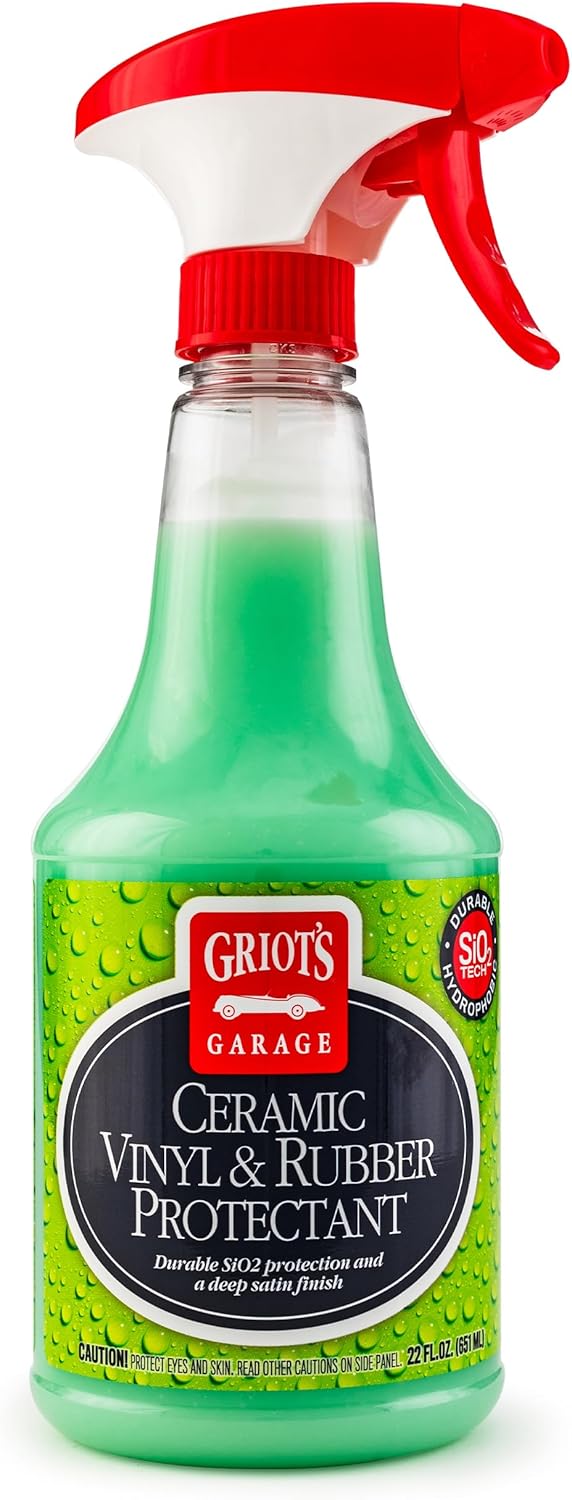
8. Griot’s Garage Ceramic Vinyl & Rubber Protectant — Best Ceramic Durability
Specifications
- Ceramic-Hybrid Protectant
- SiO₂ Ceramic + Polymer Blend
- Satin
- Vinyl, Rubber, Plastic
- Long-lasting interior protection
Quick Verdict: Griot’s Garage Ceramic Vinyl & Rubber Protectant is designed for drivers who want longer-lasting protection than traditional sprays and dressings. Its SiO₂-polymer blend creates a durable protective layer that helps resist water, spills, and environmental contamination.
SiO₂ + Polymer: Why Ceramic Lasts Longer on Dashboards
Traditional dashboard protectants typically sit on the surface and gradually wear away with cleaning, heat, and daily use. Ceramic-enhanced formulas take a different approach by creating a stronger protective barrier.
Griot’s Garage combines SiO₂ ceramic technology with polymers to form a hydrophobic coating that helps repel moisture and contaminants. While dashboards do not experience rain exposure like exterior paint, this water-repelling property can still help protect against accidental spills, fingerprints, and liquid stains.
During testing, the product produced a smooth satin appearance rather than an artificial gloss. The finish enhanced vinyl and rubber surfaces while maintaining a professional detailing look.
One of the biggest advantages is durability. Compared with standard protectants that may require application every few weeks, ceramic-hybrid formulas can maintain their protective qualities for significantly longer periods when properly applied.
The product is especially appealing to enthusiasts who already invest time into vehicle maintenance and want a premium solution that reduces the frequency of interior detailing.
Bottom Line:
If durability is your main priority, Griot’s Garage Ceramic Vinyl & Rubber Protectant offers one of the strongest solutions in this category. Its SiO₂ ceramic technology provides a more advanced protective layer than traditional dashboard dressings.
Pros
- SiO₂ ceramic technology provides longer-lasting protection
- Creates a hydrophobic barrier against spills and moisture
- Satin finish looks natural on most interiors
- Helps protect vinyl, rubber, and plastic surfaces
- Professional detailing-grade formula
- Less frequent reapplication compared with standard sprays
Cons
- Higher price than conventional protectants
- Requires proper surface preparation for best results
9. Armor All Protectant Wipes — Best Budget Convenience Pick

Specifications
- Silicone-Based Protectant
- Pre-Moistened Interior Wipes
- Gloss
- UV Blocker Technology
- Quick maintenance and budget users
Quick Verdict: Armor All Protectant Wipes remain one of the most convenient options for drivers who want fast interior touch-ups without carrying sprays, bottles, or microfiber towels. While they are not the most advanced protectant available, they still serve a purpose—especially for older vehicles and quick cleaning jobs.
Honest Assessment: Where Armor All Still Works (And Where It Doesn’t)
Armor All has been a familiar name in automotive care for decades, and its protectant wipes continue to be popular because of their simplicity and availability.
The biggest advantage is convenience. Keeping a pack in your glovebox allows you to quickly clean fingerprints, dust, and light grime from dashboards, door panels, and trim pieces whenever needed.
The formula uses a silicone-based protectant that leaves behind a noticeable shine while adding a layer of UV protection. For older vehicles with naturally glossy vinyl dashboards, this appearance can actually enhance the interior.
However, modern vehicles require more careful consideration. Many newer dashboards use soft-touch materials designed with a matte finish. On these surfaces, the glossy appearance can look unnatural and may increase windshield reflections.
Some users also find silicone-based formulas attract dust more quickly compared with water-based alternatives. For occasional maintenance and convenience, Armor All still performs well. For long-term preservation of premium interiors, higher-end water-based or ceramic products are usually better choices.
Bottom Line:
Armor All Protectant Wipes are not the most advanced dashboard protection option, but they remain useful for what they are designed to do—quick, affordable interior maintenance. If you have an older vehicle or simply want a convenient product for occasional cleaning, they still provide solid value. For newer matte dashboards, a low-gloss water-based protectant is usually the better choice.
Pros
- Extremely convenient wipe format
- Affordable and widely available
- Good for quick interior maintenance
- Provides UV blocker protection
- Works well on older vinyl interiors
- Easy glovebox storage solution
Cons
- Glossy finish may not suit modern dashboards
- Silicone formulas can attract dust on some surfaces
- Less durable than ceramic alternatives
How to Choose the Best Dash Protectant for Your Car Interior
Choosing a dashboard protectant is not simply about picking the product with the strongest shine or the most impressive marketing claims. The right formula depends on what your dashboard is made from, how much sun exposure it receives, the finish you prefer, and how long you want the protection to last.
A protectant that works perfectly on an older vehicle with a glossy vinyl dashboard may not be the best choice for a newer car with a soft-touch instrument panel and touchscreen displays.
Understanding the material, chemistry, and protection technology behind these products will help you avoid common mistakes such as sticky surfaces, excessive glare, dust buildup, or premature interior aging.
Dashboard Material Type: Know What You’re Protecting
Before buying any dashboard protectant, identify the material you’re treating. Modern vehicles use several different interior materials, and each reacts differently to chemicals, heat, and UV exposure.
Using the wrong type of product can create unwanted results, such as excessive shine on a matte dashboard or residue buildup on soft-touch surfaces.
Soft-Touch Thermoplastic (TPO/TPE) — Common in Post-2015 Vehicles
Many newer vehicles use soft-touch dashboards made from thermoplastic polyolefin (TPO) or thermoplastic elastomer (TPE) materials.
These surfaces are designed to provide a premium feel because they contain additives called plasticizers, which keep the material flexible and smooth. However, these same properties make them more vulnerable to UV damage and heat.
Over time, exposure to sunlight can cause:
- Plasticizer loss
- Sticky or tacky surfaces
- Texture changes
- Cracking and peeling
For TPO and TPE dashboards, water-based protectants with a matte or satin finish are usually the safest choice. Products such as 303 Aerospace Protectant, SONAX Plastic Detailer, and similar low-residue formulas work well because they protect without leaving heavy silicone buildup.
Avoid high-gloss dressings unless the manufacturer specifically recommends them, as they can create unnatural shine and windshield glare.
Hard ABS Plastic — Common in Older Vehicles
Older vehicles often use acrylonitrile butadiene styrene (ABS) plastic dashboards.
ABS is a durable material that handles heat and wear better than many soft-touch surfaces, but it is still vulnerable to UV oxidation.
Instead of becoming sticky, ABS dashboards typically show:
- Faded color
- Chalky surfaces
- Loss of original appearance
- Small surface cracks
Because ABS dashboards are generally harder and less sensitive, they can tolerate a wider range of finishes. Some owners prefer satin or even high-gloss protectants to restore depth and shine.
However, UV protection remains the most important factor because oxidation—not softness loss—is the primary failure point.
Vinyl-Wrapped Dash — Requires Different Chemistry Than Bare Plastic
Some dashboards use a vinyl covering, often made from PVC dashboard material, wrapped over a structural base.
Vinyl surfaces need products that maintain flexibility while protecting against UV exposure.
A good vinyl protectant should:
- Prevent drying and cracking
- Maintain surface flexibility
- Resist fading
- Avoid petroleum-based solvents
Heavy petroleum distillates can accelerate deterioration by affecting the plasticizers within vinyl. Water-based polymer formulas are generally a safer option for long-term care.
Faux Leather (Leatherette/PU) — Needs Conditioning Protection
Luxury vehicles and premium trims often use leatherette, polyurethane (PU), or synthetic leather dashboard coverings.
These materials require different care compared with traditional plastic.
A suitable protectant should provide:
- UV defense
- Conditioning properties
- pH-balanced cleaning
- Low residue finish
Avoid aggressive cleaners that can dry out polyurethane coatings. Products designed for multi-surface interior care, such as leather-vinyl-rubber formulas, are often better choices for these applications.
UV Protection Types: Not All UV Defense Is Equal
Many products advertise “UV protection,” but not all UV technologies work the same way.
A quality dashboard protectant should use ingredients that actively reduce UV damage rather than simply make the surface look shiny.
UV Absorbers (Benzotriazole, Oxalanilide) — The Gold Standard
Premium protectants often use chemical UV absorbers such as:
- Benzotriazole UV absorbers
- Oxalanilide compounds
These ingredients work by absorbing harmful ultraviolet energy and converting it into a small amount of harmless heat.
They help protect interior polymers from:
- UV-A radiation
- UV-B radiation
- Photooxidation
- Polymer degradation
This technology is especially valuable for vehicles parked outdoors because it addresses the root cause of fading rather than only improving appearance.
UV Reflectors (Titanium Dioxide, Zinc Oxide)
Some formulas rely on UV-reflecting particles such as:
- Titanium dioxide
- Zinc oxide
These ingredients work by reflecting some UV radiation away from the surface.
While useful, they are generally less common in interior protectants because dashboards are exposed to UV through glass rather than direct outdoor exposure.
They are often more effective in exterior coatings and sunscreens than enclosed vehicle interiors.
UV Clear Coat Technology (Meguiar’s Approach)
Some products use a UV clear coat approach, where a polymer layer creates a physical barrier between the dashboard material and environmental exposure.
Meguiar’s formulas are known for using polymer-based protection technology designed to:
- Enhance surface appearance
- Improve durability
- Add a protective film
Advanced formulas may also include HALS (Hindered Amine Light Stabilizers), which help slow degradation caused by UV exposure over time.
Formula Chemistry: Water-Based vs. Silicone vs. Ceramic
The chemistry inside a dashboard protectant determines how it behaves after application.
Water-Based Polymer Formulas — Best for Modern Interiors
Water-based formulas use a water-based emulsion to deliver polymers and protective ingredients without relying heavily on oils or solvents.
Advantages include:
- Natural appearance
- Less residue
- Lower off-gassing risk
- Better compatibility with soft-touch materials
These formulas are usually preferred for newer vehicles because they protect without dramatically changing the dashboard texture or sheen.
Silicone-Based Dressings — High Shine but Trade-Offs
Traditional silicone-based protectants use ingredients such as:
- Silicone oil
- Dimethicone
Their biggest advantage is appearance. They create a deep, glossy finish that many drivers associate with a freshly detailed vehicle.
However, silicone formulas can have drawbacks:
- More dust attraction
- Increased windshield glare
- Potential silicone off-gassing
- Excessive shine on modern interiors
They are often better suited for older vehicles with naturally glossy vinyl dashboards.
Nano-Ceramic Hybrid (SiO₂) — Longest Durability
Ceramic protectants use SiO₂ nano-ceramic technology to create a stronger protective layer.
Benefits include:
- Hydrophobic properties
- Improved durability
- Resistance to spills
- Longer protection intervals
The ceramic particles bond with polymers to create a protective polymer shield that lasts longer than traditional sprays.
Graphene-Infused Formulas — Newest Technology Category
Graphene-enhanced protectants are a newer category designed to improve:
- Heat resistance
- Anti-static performance
- Surface durability
A graphene oxide coating can help reduce dust attraction and improve the protective characteristics of ceramic-based formulas.
While graphene products are promising, they are still a developing category compared with traditional water-based and ceramic technologies.
Finish Type: Match the Sheen to Your Interior
The best-looking dashboard protectant is the one that matches your vehicle’s original interior design.
High Gloss Finish
Best for:
- Older vehicles
- Classic cars
- Naturally shiny vinyl dashboards
High-gloss products create a dramatic appearance but may increase reflections on the windshield.
Satin Finish
The safest middle ground.
Benefits:
- Slight enhancement
- Professional appearance
- Less glare
- Works on most vehicles
Many enthusiasts prefer satin because it provides protection without making the interior look artificial.
Matte/Natural Finish
Best for:
- Post-2015 vehicles
- Soft-touch dashboards
- Luxury interiors
Modern vehicles are designed with low-sheen surfaces, so matte protectants preserve the OEM appearance.
Glossy products on these interiors can create:
- Unwanted reflections
- Uneven appearance
- Visual distraction while driving
Anti-Static and Dust Repellency: The Overlooked Feature
Many drivers focus on shine but ignore one of the most important characteristics: dust resistance.
Dashboards naturally attract dust because plastic surfaces develop electrical charges through a process called the triboelectric effect.
Products containing an anti-static agent help reduce this charge through electrostatic dissipation, meaning fewer dust particles stick to the surface.
Benefits include:
- Cleaner dashboard appearance
- Less frequent wiping
- Reduced dust buildup
Products such as:
- 303 Aerospace Protectant
- SONAX Plastic Detailer
- Adam’s Polishes Interior Detailer
perform well in this category because they prioritize clean, low-residue finishes.
Windshield Fogging and Off-Gassing Risk
A dashboard protectant should improve your interior—not create visibility problems.
Some heavy silicone-based products can release volatile organic compounds (VOCs) inside a hot vehicle. This process, known as silicone off-gassing, may leave a thin film on interior glass.
Possible issues include:
- Windshield haze
- Reduced visibility
- Increased cleaning frequency
To test whether a product is causing problems:
- Apply the protectant normally.
- Drive for several days.
- Wipe the inside of the windshield with a clean microfiber towel.
- Check for oily residue.
Water-based and ceramic formulas generally have a lower risk of this issue.
Durability and Cost of Ownership
The cheapest dashboard protectant is not always the most affordable long-term.
A $10 spray that requires weekly application may cost more over a year than a premium product that lasts several months.
| Formula Type | Average Protection Duration | Best For |
| Standard spray protectants | 2–4 weeks | Routine maintenance |
| Premium polymer formulas | 4–8 weeks | Regular vehicle care |
| Ceramic hybrid formulas | 2–4 months | Long-term protection |
Example Cost Comparison
A $15 spray used every month:
$15 × 12 applications = $180/year
A $35 ceramic protectant used four times yearly:
$35 × 4 applications = $140/year
The ceramic option costs more upfront but may actually save money over time.
When choosing a dashboard protectant, consider:
- Price per ounce
- Application frequency
- Durability
- Protection quality
The best product is the one that fits your vehicle, climate, and maintenance routine—not necessarily the cheapest bottle on the shelf.
How to Apply Dash Protectant Correctly (Step-by-Step)
Applying a dashboard protectant correctly is just as important as choosing the right product. Even a premium formula can underperform if it is applied over dust, old residue, or contaminated surfaces.
A common mistake many drivers make is spraying protectant directly onto the dashboard and wiping it around. This often leads to uneven coverage, greasy patches, streaks, and excess product collecting around buttons, vents, and screen edges.
For the best results, treat your dashboard the same way professional detailers approach interior care: clean first, protect second, and apply in controlled layers.
Follow these steps to achieve a clean OEM finish while maximizing UV protection and durability.
Step 1: Deep Vacuum All Surfaces First
Before applying any dashboard protectant, remove loose dirt, dust, and debris from the entire interior.
Dust particles act like tiny abrasives. When mixed with protectant, they can spread across the surface and create a dirty film instead of a protective layer.
Start by vacuuming:
- Dashboard surface
- Instrument cluster area
- Air vents
- Center console
- Door panels
- Seams and textured areas
- Around infotainment screens
Use a soft detailing brush around:
- Vent openings
- Buttons
- Trim gaps
- Speaker grilles
Pay extra attention to textured dashboards because dust collects deep inside the grain and may not be removed by a simple wipe.
Detailing tip: Use compressed air or a soft brush to loosen trapped dust from difficult areas before vacuuming again.
A clean surface allows the protectant to bond evenly instead of sealing dirt underneath the protective layer.
Step 2: Clean With a Dedicated Interior Cleaner (Not a Protectant)
Many people skip cleaning and immediately apply protectant, but this can trap:
- Body oils
- Food residue
- Old dressing buildup
- Road dust
- Cleaning chemicals
A dashboard protectant is designed to protect the material, not remove heavy contamination.
Use a dedicated interior cleaner suitable for your dashboard material:
- TPO/TPE soft-touch plastics
- ABS plastic
- Vinyl
- Leatherette
- Rubber trim
Spray the cleaner onto a microfiber towel rather than directly onto the dashboard to avoid liquid entering:
- Electrical controls
- Screen edges
- Vent openings
Gently wipe the surface until the towel stops picking up dirt.
For textured dashboards, use a soft interior brush to lift contamination from the grain.
Allow the surface to dry completely before applying protectant.
Why this matters: Applying protectant over dirt creates an uneven barrier and reduces the product’s ability to provide proper UV protection.
Step 3: Strip Old Protectant Buildup If Switching Products
If your dashboard already has layers of old silicone-based dressing or glossy protectant, removing the previous coating can improve the performance of your new product.
Old residue may cause:
- Uneven finish
- Sticky texture
- Excess shine
- Poor bonding of ceramic or polymer formulas
This is especially important when switching from a silicone-based product to a water-based or ceramic protectant.
70/30 Isopropyl Alcohol Solution for Old Silicone Residue Removal
For stubborn buildup, some detailers use a diluted isopropyl alcohol solution:
70% water / 30% isopropyl alcohol
This helps break down oily residues without being as aggressive as using undiluted alcohol.
Before applying:
- Test on a hidden area first.
- Apply lightly to a microfiber towel.
- Wipe a small section.
- Follow with a clean damp microfiber towel.
Avoid excessive alcohol use on sensitive soft-touch materials because repeated exposure may dry certain surfaces.
For modern dashboards, always prioritize manufacturer recommendations and use gentle interior cleaners whenever possible.
Step 4: Apply Protectant to an Applicator — Never Spray Directly on Dash
One of the most common application mistakes is spraying protectant directly onto the dashboard.
While this may seem faster, it creates several problems:
- Uneven coverage
- Overspray on glass
- Product buildup around buttons
- Excess residue in textured areas
Instead:
- Spray a small amount of protectant onto a microfiber applicator pad.
- Spread it evenly across the pad.
- Apply a thin layer to the dashboard.
A foam or microfiber applicator gives better control and prevents product waste.
Remember:
More product does not equal more protection.
Most quality protectants work best when applied in thin, even layers.
Step 5: Work in Sections and Buff Excess Immediately
Do not coat the entire dashboard at once.
Work in small sections:
- Driver-side dashboard
- Passenger-side dashboard
- Center console
- Door panels
- Trim pieces
Apply the product evenly, then wipe away excess with a clean microfiber towel.
Proper buffing helps achieve:
- Even finish
- Reduced streaking
- Less dust attraction
- Natural appearance
For matte dashboards, the goal is not shine. The goal is a clean, protected surface that looks like it came from the factory.
For glossy products, buffing controls how much shine remains.
If the surface feels oily or slippery after application, too much product was used.
Step 6: Allow Proper Cure Time (15–60 Minutes Depending on Formula)
After application, allow the protectant enough time to bond with the surface.
Cure times vary depending on the formula:
| Product Type | Approximate Cure Time |
| Water-based protectants | 15–30 minutes |
| Polymer protectants | 30–60 minutes |
| Ceramic-hybrid formulas | 1–2 hours recommended |
During curing:
- Avoid touching treated areas
- Keep doors open if possible
- Avoid parking in extreme heat immediately after application
A proper cure allows protective polymers, ceramic particles, or conditioning agents to form a more uniform layer.
Pro Tip: Reapplication Schedule by Climate Zone and Parking Situation
How often you should apply dashboard protectant depends heavily on where and how your vehicle is parked.
A vehicle parked outdoors in Arizona, Texas, Florida, or California experiences much higher UV exposure than a garage-kept vehicle in a mild climate.
Hot, High-UV Climates (Arizona, Nevada, Texas, Florida)
Recommended schedule:
Every 3–6 weeks
Reasons:
- Strong UV-A and UV-B exposure
- Higher interior temperatures
- Faster plasticizer loss
Use products with strong UV absorbers or ceramic protection.
Moderate Climates
Recommended schedule:
Every 6–10 weeks
For vehicles parked partly outdoors, regular maintenance with a quality polymer protectant is usually sufficient.
Garage-Parked Vehicles
Recommended schedule:
Every 3–4 months
Indoor parking significantly reduces:
- UV oxidation
- Heat cycling
- Surface degradation
A premium ceramic-hybrid protectant may last even longer.
Vehicles Used Daily or With Heavy Interior Exposure
Apply more frequently if your vehicle experiences:
- Frequent passengers
- Children
- Pets
- Food spills
- Heavy dust exposure
Dash Protectant vs. Dashboard Cleaner: Key Differences Explained
One of the most common mistakes in interior care is treating a dashboard cleaner and a dashboard protectant as the same product. While some modern formulas combine both functions, they perform completely different jobs.
A cleaner prepares the surface by removing contamination, while a protectant creates a barrier that helps defend the material against UV exposure, drying, fading, and premature aging.
Using the right product at the right stage is important because applying protectant over dirt or old residue can reduce performance and create an uneven finish.
What Interior Cleaners Do (and Don’t Do)
A dashboard cleaner is designed primarily to remove unwanted material from the surface.
Interior cleaners help remove:
- Dust buildup
- Fingerprints
- Body oils
- Food residue
- Light stains
- Previous product residue
They work by lifting contamination so it can be safely removed with a microfiber towel.
Depending on the formula, interior cleaners may contain:
- Mild detergents
- pH-balanced cleaning agents
- Surfactants
- Conditioning ingredients
However, a cleaner usually does not provide long-term UV protection.
A clean dashboard can still suffer from:
- UV oxidation
- Plasticizer loss
- Fading
- Cracking
- Dry appearance
Think of a cleaner as preparing the surface, not protecting it.
What Cleaners Should Not Do
A quality interior cleaner should not:
- Leave a greasy coating
- Create artificial shine
- Damage soft-touch materials
- Strip factory finishes
- Leave heavy fragrance residue
For modern vehicles, especially those with TPO/TPE soft-touch dashboards, gentle pH-balanced cleaners are the safest choice.
What Protectants Do (and Don’t Do)
A dashboard protectant is designed to create a protective layer over the cleaned surface.
Its primary functions include:
- Blocking UV-A and UV-B radiation
- Reducing photooxidation
- Maintaining surface flexibility
- Preventing premature fading
- Improving resistance to dust and contamination
Depending on the formula, protectants may use:
- UV absorbers such as benzotriazole
- Polymer shields
- Ceramic SiO₂ technology
- Anti-static additives
- Conditioning agents
A good protectant should preserve the dashboard’s original appearance rather than simply making it shiny.
What Protectants Cannot Do
Dashboard protectants cannot:
- Repair deep cracks
- Reverse severe UV damage
- Restore missing plasticizers
- Fix peeling vinyl
- Replace damaged materials
Once a dashboard has structural damage, replacement or professional restoration may be required.
Protectants work best as a preventive maintenance product.
When to Use Both Together vs. a 2-in-1 Combo Product
For the best results, most detailers recommend using a cleaner first and protectant second.
The ideal process:
- Remove dirt and contamination with an interior cleaner.
- Allow the surface to dry.
- Apply dashboard protectant.
- Buff excess product.
This approach provides the cleanest finish and allows the protective ingredients to bond properly.
When a Separate Cleaner + Protectant Is Better
Use separate products when:
- The dashboard has visible dirt buildup
- You are removing old silicone residue
- The vehicle has not been detailed recently
- You want maximum UV protection
- The vehicle is exposed to harsh sunlight
Example:
A product like 303 Aerospace Protectant works best when applied to a properly cleaned surface.
When a 2-in-1 Product Makes Sense
Combination products such as interior detailers are useful when:
- You clean your vehicle frequently
- The dashboard is already in good condition
- You need quick maintenance
- You want a simple wipe-down solution
Products like Chemical Guys InnerClean are excellent for regular upkeep but may not provide the same long-term protection as dedicated protectants.
Products to Avoid on Dashboards
Not every household cleaner or automotive product is safe for dashboard materials.
Avoid using:
Petroleum Distillate-Based Products
Petroleum-based cleaners can affect plasticizers in vinyl and plastic surfaces.
Potential problems include:
- Drying
- Surface deterioration
- Sticky textures
- Long-term material damage
Ammonia-Based Cleaners
Household glass cleaners often contain ammonia, which can be too aggressive for many automotive interior materials.
Ammonia may:
- Dry plastic surfaces
- Damage coatings
- Affect touchscreen finishes
- Leave streaks
Excessive Silicone Dressings
Silicone-based products are not automatically bad, but heavy use can create problems.
Possible issues:
- Dust attraction
- Greasy appearance
- Windshield haze
- Excessive gloss
For modern interiors, water-based polymer protectants are usually the safer choice.
Dashboard Protectant for Different Vehicle Types
The best dashboard protectant depends heavily on your vehicle type, interior materials, and driving conditions.
A product that works perfectly on a classic car may not be ideal for a modern luxury vehicle.
Best Dash Protectant for Trucks and SUVs (Large Surface Area Considerations)
Trucks and SUVs typically have larger dashboards, more exposed trim, and longer periods of sun exposure due to frequent outdoor use.
Important factors include:
- Strong UV resistance
- Easy application
- Long durability
- Dust resistance
For large interiors, a spray-based protectant is often more practical because it covers more surface area quickly.
Recommended characteristics:
- Water-based polymer formula
- Anti-static protection
- Satin or matte finish
- Long reapplication intervals
Products like 303 Aerospace Protectant and ceramic-hybrid formulas are strong options because they provide broad surface protection without leaving heavy residue.
Best Dash Protectant for Luxury Vehicles (Soft-Touch + Leatherette Dash Panels)
Luxury vehicles often use premium materials such as:
- Soft-touch TPO/TPE surfaces
- Leatherette
- Polyurethane coatings
- Alcantara-style materials
- Piano-black trim
These interiors require a more delicate approach.
Avoid:
- High-gloss dressings
- Heavy silicone formulas
- Strong solvents
The ideal protectant should provide:
- OEM matte appearance
- Low residue
- UV protection
- Safe compatibility with multiple materials
Products such as 303 Aerospace Protectant, SONAX Plastic Detailer, and premium interior detailers are better suited for these vehicles.
Best Dash Protectant for Classic and Vintage Cars (High-Gloss Vinyl Restoration)
Classic vehicles often have:
- Hard vinyl dashboards
- Glossy plastic trim
- Older PVC materials
Unlike modern vehicles, many vintage interiors were originally designed with a more noticeable shine.
A high-gloss protectant can help restore depth and richness.
Look for:
- Vinyl conditioning properties
- UV protection
- Gloss enhancement
- Plastic flexibility support
Products like Meguiar’s Supreme Shine Protectant work well for owners who want a restored showroom appearance.
However, avoid applying modern matte formulas if the goal is maintaining an authentic vintage look.
Best for Vehicles Parked in Sun-Heavy US States (AZ, FL, TX, CA)
Vehicles parked outdoors in states such as:
- Arizona
- Florida
- Texas
- California
experience some of the harshest interior conditions.
High temperatures combined with UV exposure accelerate:
- Plasticizer loss
- Color fading
- Dashboard cracking
- Material breakdown
For these environments, prioritize:
- Strong UV absorbers
- Ceramic protection
- Anti-static properties
- Longer durability
Recommended features:
✅ Benzotriazole UV absorbers
✅ SiO₂ ceramic protection
✅ Matte/satin finish
✅ Heat-resistant polymers
A quality protectant should be reapplied regularly because even premium formulas cannot completely eliminate extreme environmental exposure.
Signs Your Dashboard Urgently Needs Protectant
Your dashboard may already be showing early signs of UV damage if you notice:
Chalky or Faded Appearance
A dull, gray, or washed-out appearance often indicates UV oxidation and surface degradation.
Sticky or Tacky Feel
A sticky dashboard can indicate plasticizer breakdown, especially on soft-touch materials.
Visible Cracks or Small Splits
Cracking usually means the material has lost flexibility due to heat and UV exposure.
Color Fading
If the dashboard no longer matches surrounding trim, UV damage has likely already started.
Dust Sticks More Than Usual
A dashboard that constantly attracts dust may have lost its protective surface properties or lacks anti-static protection.
Dry, Rough Texture
A rough or brittle feel suggests the material is losing conditioning agents.
Frequently Asked Questions About Dashboard Protectants
How often Should I Apply Dashboard Protectant?
The ideal application schedule depends on your climate, parking situation, and the type of protectant you use. Most standard dashboard protectants should be reapplied every 4–8 weeks, while ceramic-based formulas can often last 2–4 months. Vehicles parked outdoors in high-UV areas like Arizona, Texas, Florida, and California may require more frequent applications because heat and sunlight accelerate interior aging.
Is 303 Aerospace Protectant Safe for Soft-Touch Dashboards?
Yes, 303 Aerospace Protectant is considered one of the safer options for soft-touch dashboards, including many TPO and TPE materials found in newer vehicles. Its water-based, silicone-free formula helps protect against UV-A and UV-B radiation without leaving a greasy finish. However, always test any product on a small hidden area first, especially on aftermarket materials or specialty surfaces.
What’s the Difference Between Ceramic and Water-Based Dash Protectants?
Water-based dashboard protectants use polymers and conditioning agents to provide UV protection while maintaining a natural factory appearance. Ceramic protectants use SiO₂ nano-ceramic technology to create a stronger hydrophobic protective layer that typically lasts longer.
Water-based formulas are often better for frequent maintenance and modern interiors, while ceramic formulas are ideal for drivers wanting maximum durability.
Can Dash Protectant Restore a Cracked or Faded Dashboard?
No, dashboard protectants cannot fully repair severe cracks, peeling, or structural damage. They are designed to prevent deterioration and improve the appearance of mildly faded surfaces. Products with restoration-focused formulas, such as nano-ceramic protectants, may improve color depth and reduce the appearance of aging, but heavily damaged dashboards usually require professional repair or replacement.
Is Armor All Bad for Dashboards?
Armor All is not necessarily bad for dashboards, but it depends on the surface and the finish you prefer. Its silicone-based formula works well on older vehicles with glossy vinyl interiors. However, some modern matte dashboards may become too shiny or attract more dust after application. For newer soft-touch interiors, a water-based matte protectant is usually a better choice.
Can I use Dash Protectant on My Car’s Touchscreen?
Most traditional dashboard protectants should not be applied directly to touchscreen displays unless the manufacturer specifically states they are screen-safe. Touchscreens require products designed to avoid streaking, coating buildup, and sensitivity issues. Use a dedicated screen-safe interior detailer for infotainment displays, then apply dashboard protectant only to surrounding plastic or vinyl surfaces.
What Causes a Dashboard to Become Sticky, and How Do I Fix it?
A sticky dashboard is usually caused by plasticizer breakdown, UV exposure, heat cycling, or aging soft-touch materials. As polymers degrade, the surface can become tacky and attract dust. Start by cleaning the area with a suitable interior cleaner and removing old residue. If the material has chemically degraded, a restoration product may improve appearance, but complete repair may require replacement.
Does Dash Protectant Prevent Windshield Fogging?
A properly formulated dashboard protectant should not cause windshield fogging, but heavy silicone-based products may release residue that can eventually create a hazy film on interior glass. To reduce this risk, avoid spraying directly onto dashboards, use a microfiber applicator, and buff away excess product. Water-based and ceramic formulas generally have a lower risk of interior glass contamination.
Final Verdict: Which Dashboard Protectant Should You Buy?
After comparing different formulas, finishes, protection technologies, and use cases, the best dashboard protectant depends on your vehicle’s interior material and your maintenance goals.
There is no single product that is perfect for every driver. A newer luxury vehicle with a soft-touch matte dashboard requires a different approach than an older truck with glossy vinyl surfaces.
Based on performance, ease of use, durability, and overall value, these are the products we would choose for different situations.
Best Overall → 303 Aerospace Protectant
Best for: Most Vehicles, Modern Interiors, UV Protection
303 Aerospace Protectant remains our top recommendation because it delivers the balance most drivers need:
- Strong UV protection
- Matte OEM appearance
- Anti-static properties
- Silicone-free water-based formula
- Safe compatibility with multiple surfaces
It protects without making dashboards look artificially shiny, which is why it works especially well on newer vehicles.
Choose 303 Aerospace Protectant if you want one reliable product that protects your dashboard while maintaining a factory appearance.
Best for Damaged or Sticky Dash → RENEW PROTECT DASH
Best for: Older Vehicles, Faded Dashboards, Sticky Surfaces
If your dashboard has already started showing signs of aging, a standard maintenance protectant may not be enough.
RENEW PROTECT DASH stands out because it focuses more on restoration and improving the appearance of worn surfaces.
It is a better choice for:
- High-mileage vehicles
- Sun-damaged interiors
- Sticky dashboard problems
- Older vinyl materials
Choose RENEW PROTECT DASH if your priority is improving the appearance of an aging dashboard before the damage becomes worse.
Best Advanced Formula → Turtle Wax Inside Job Ceramic + Graphene
Best for: Drivers Wanting Newer Protection Technology
Turtle Wax Inside Job combines ceramic and graphene technology to provide a more advanced protective layer than traditional sprays.
Its strengths include:
- SiO₂ nano-ceramic protection
- Graphene-enhanced durability
- Multi-surface compatibility
- Hydrophobic properties
Choose Turtle Wax Inside Job if you want premium technology and longer-lasting protection without applying a professional ceramic coating.
Best Long-Term Durability → Griot’s Garage Ceramic Vinyl & Rubber Protectant
Best for: Enthusiasts and Detail-Focused Owners
For drivers who prefer applying protection less frequently, Griot’s Garage Ceramic Vinyl & Rubber Protectant is one of the strongest options.
Its SiO₂-polymer blend creates a durable protective barrier that helps resist:
- Water spots
- Spills
- Environmental contamination
- UV exposure
Choose Griot’s Garage Ceramic Protectant if maximum durability is your priority.
Best Budget Convenience Pick → Armor All Protectant Wipes
Best for: Quick Maintenance and Affordable Interior Care
Armor All Protectant Wipes are not the most advanced option, but they remain popular because they are:
- Affordable
- Easy to store
- Simple to use
- Available almost everywhere
They are especially useful for older vehicles and quick interior touch-ups.
Choose Armor All Wipes if convenience and low cost matter more than maximum durability.
Final Recommendation
For most drivers, 303 Aerospace Protectant is the best overall dashboard protectant because it provides the right combination of UV defense, appearance, and material safety.
However, the best choice ultimately depends on your dashboard:
- Modern soft-touch interior → 303 Aerospace Protectant or SONAX Plastic Detailer
- Aged or sticky dashboard → RENEW PROTECT DASH
- Premium ceramic protection → Turtle Wax Inside Job or Griot’s Garage Ceramic
- Older glossy vinyl interior → Meguiar’s Supreme Shine
- Quick affordable maintenance → Armor All Protectant Wipes
Protecting your dashboard is a small maintenance step that can have a major impact on your vehicle’s long-term appearance, comfort, and resale value. A quality protectant applied consistently costs far less than repairing sun-damaged interior materials later.